TRNC Media Dismisses Greek Cypriot Claims of Near-Collision Between Turkish Military Plane and British Jet
TRNC media dismissed Greek Cypriot and Greek reports of a near-collision on August 19 between a Turkish Air Force A400M and a British passenger jet, citing 1,300 feet vertical and two nautical miles horizontal separation.
Original report
www.turkiyetoday.com
Industry impact
Disputed readings of the same radar data show how contested airspace over Cyprus leaves safety-margin assessments open to political interpretation rather than shared technical consensus.
What happened
Media in the Turkish Republic of Northern Cyprus said Saturday that Greek Cypriot and Greek reports describing a near-collision between a Turkish Air Force A400M transport aircraft and a British passenger jet on August 19 were politically motivated, asserting the two aircraft were never in danger.
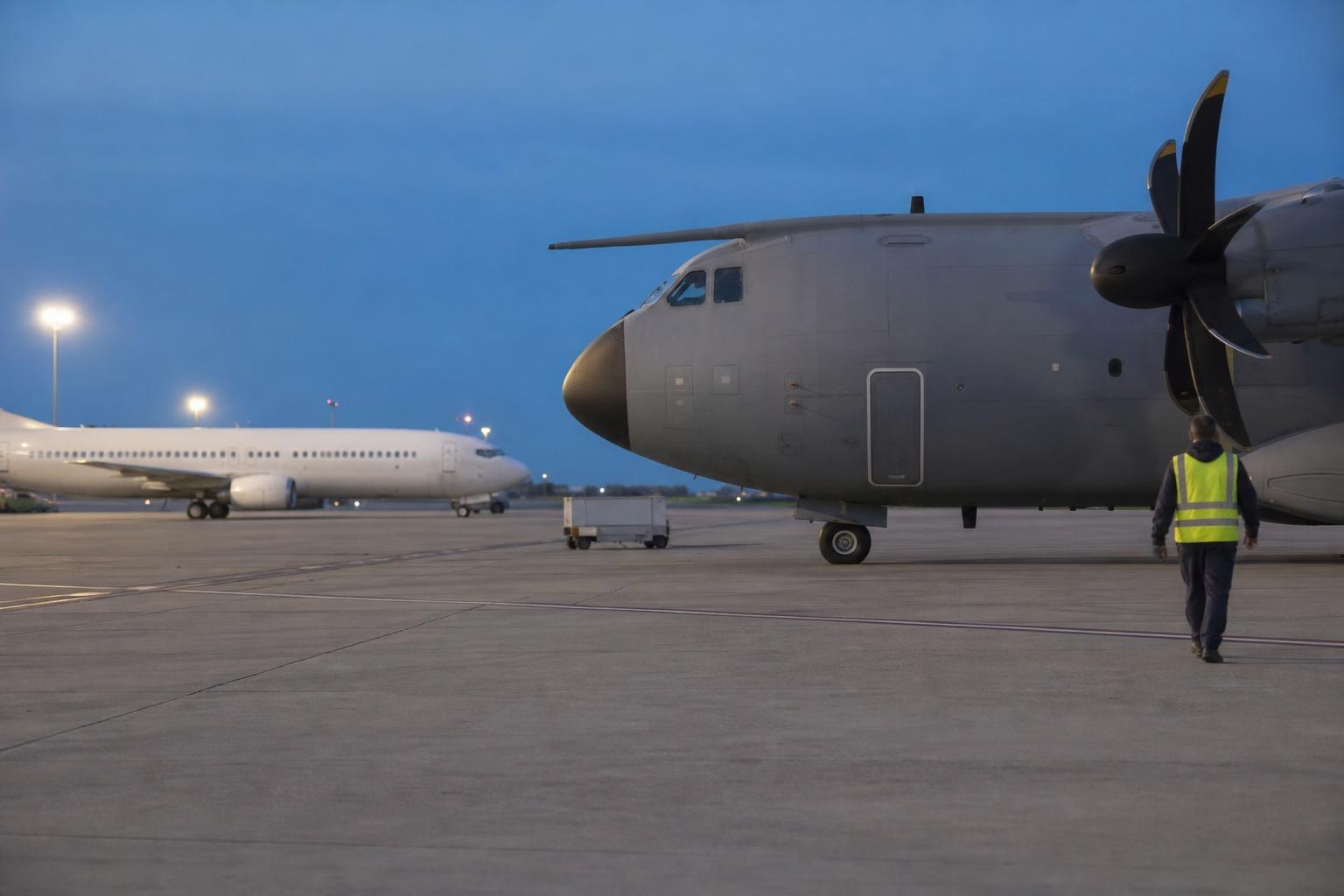
The Kibris newspaper, in a column by Mete Tumerkan titled "Radar Doesn't Look at a Plane's Nationality, It Sees the Truth," said Greek Cypriot and Greek outlets characterized the encounter as a "collision risk" and a "threat to civil aviation." The incident occurred northwest of Cyprus, where the British passenger jet on the Belfast-Larnaca route and the Turkish Air Force A400M returning from Somalia to Türkiye crossed paths in the Ercan Advisory Airspace. Tumerkan wrote that the Ercan Air Traffic Control Center had notified the Turkish A400M crew of the approaching British aircraft in advance, and that Turkish pilots visually tracked the civilian jet. He said the two aircraft crossed paths in a controlled manner, maintaining 1,300 feet of vertical separation and two nautical miles of horizontal separation, and he noted that the British airline filed no Traffic Alert and Collision Avoidance System report following the incident.
Tumerkan said Türkiye's air traffic management systems, including Mode-S surveillance capability and a wide radar network, contribute to regional air safety. He noted that Ercan Airport operates both primary and secondary surveillance radars, with an additional secondary surveillance radar at Agirdag, and that the Ercan Area Control Center provides 24-hour radar control service. He argued that the Turkish military aircraft's movement through the airspace was being used by Greek Cypriot actors to manufacture a political crisis, stating: "Greek Cypriot claims are political; no danger occurred between the Turkish military cargo plane and the British passenger jet on Aug. 19."
Industry impact & what to watch
Encounters in airspace with overlapping or disputed control authority tend to produce two competing accounts once separation figures become public, because the same radar trace can be read as routine coordination by one side and as a hazard by the other. Cyprus airspace, split between Ercan Advisory Airspace and Nicosia's area of responsibility, is a recurring setting for this kind of dispute given the political status of the island's air traffic management arrangements.
Commercial and military traffic crossing such zones normally relies on advance notification between control units and pilot visual acquisition to maintain separation, which is what Tumerkan's account describes happening in this case. Whether the absence of a filed Traffic Alert and Collision Avoidance System report from the British operator settles the safety question, or whether Greek Cypriot or Greek aviation authorities issue their own account of the August 19 crossing, will determine whether this stays a media dispute or becomes a formal airspace-safety inquiry.
Who this affects
- Air Traffic Management (ATM) Authorities — Competing public accounts of the August 19 Cyprus crossing put pressure on air traffic authorities to clarify how separation was managed.
- Commercial Airlines — Airlines flying through Ercan Advisory Airspace may see closer attention to how crossings with military traffic are coordinated.
The underlying facts come from the originating publisher (linked above). The narrative, industry-impact assessment and per-role analysis below are produced independently by the AVI-GO intelligence team from public information. Cite as: AVI-GO, "TRNC Media Dismisses Greek Cypriot Claims of Near-Collision Between Turkish Military Plane and British Jet" news brief, 2026-08-24.
How to cite
AVI-GO, “TRNC Media Dismisses Greek Cypriot Claims of Near-Collision Between Turkish Military Plane and British Jet”. https://ai.avi-go.com/news/ai-news-center/news-briefs/trnc-media-dismisses-greek-cypriot-claims-of-near-collision-between-tu-c6fe175b17c354ac54a599f8da57eaa8
Figures carry an explicit measurement window — cite the window shown on this page, not the date you retrieved it.