Strong Winds Rock Aircraft at Forlì Airport as Severe Storm Sweeps Northern and Central Italy
A severe storm with gusts exceeding 100 kilometers per hour tilted and displaced small parked aircraft at Forlì Airport in Emilia-Romagna on August 20–21, forcing a roughly one-hour closure.
Original report
ahblicklive.com
Industry impact
The episode shows how lightweight general-aviation aircraft parked outdoors carry a distinct exposure to sudden high-wind events that larger commercial types do not face in the same way.
What happened
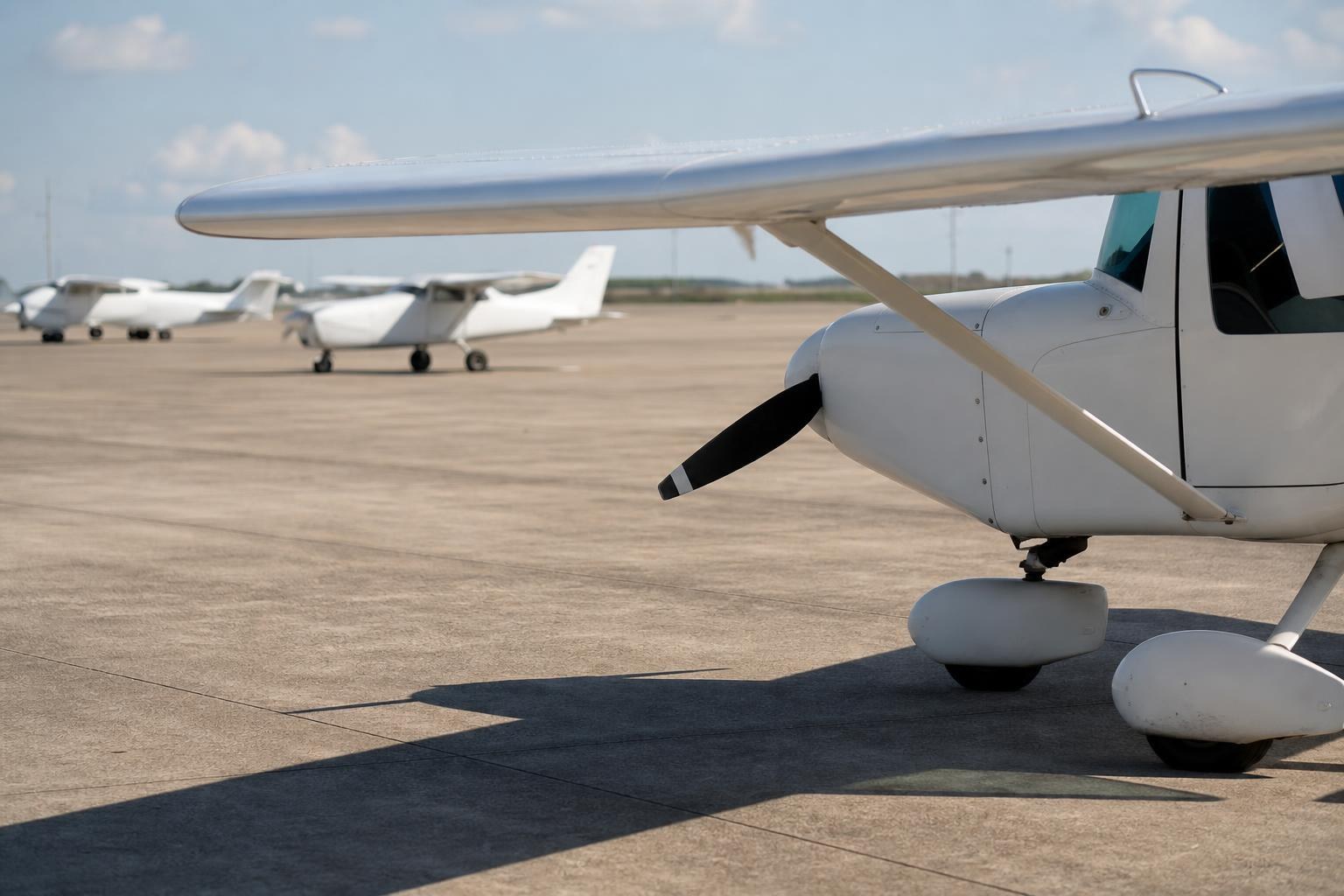
Powerful winds rocked and displaced small aircraft parked on the tarmac at Forlì Airport in Emilia-Romagna as a severe storm swept across northern and central Italy on August 20–21. Video footage showed the aircraft tilting and shifting violently under gusts that exceeded 100 kilometers per hour around the airport. Authorities temporarily closed Forlì Airport for approximately one hour as the storm front moved through the area.
Regional officials in Emilia-Romagna reported more than 150 emergency interventions, with numerous trees downed by the powerful winds. The storm also struck Liguria, Tuscany, and Lombardy. In Tuscany, more than 23,000 lightning strikes were recorded during the storm period, while wind gusts reached 106 kilometers per hour along the Pisan coast and 103 kilometers per hour in Florence province. Heavy rainfall triggered flooding, falling trees, power outages, and infrastructure damage across the affected regions.
No major commercial aviation accident was reported in connection with the aircraft footage. Officials noted that small general-aviation aircraft, due to their relatively light weight and large surface areas, are especially susceptible to being rocked or displaced by powerful gusts when parked on the ground.
Industry impact & what to watch
Parked general-aviation aircraft sit in a different risk category from aircraft in flight: a fast-moving storm front can move and damage them on the ramp within minutes, as the Forlì footage shows, without any accident being recorded in the air. This is a ground-exposure event rather than a flight-safety one, and it lands on whoever owns and insures the airframe at the moment the front arrives.
General-aviation airports typically hold light aircraft outdoors on open ramps rather than in hangars, which is exactly the exposure officials pointed to when they described light weight and large surface area as the reason small aircraft rock or shift in gusts of this strength. The one-hour closure at Forlì shows how quickly a field can suspend operations once gusts cross that threshold, even without any reported injury or major damage.
What follows will depend on whether any of the displaced aircraft at Forlì sustained damage requiring inspection or repair, and whether Emilia-Romagna's broader storm toll — the downed trees, power outages, and more than 150 emergency interventions — extends to other airfields in the region as the front continues across Liguria, Tuscany, and Lombardy.
Who this affects
- General Aviation Airports — Open ramps at general-aviation fields exposed based light aircraft to gusts over 100 kilometers per hour during the front.
- Aviation Insurance Companies — Hull claims from wind damage to parked light aircraft may follow this storm's pass through the region.
- Maintenance Repair and Overhaul (MRO) — Displaced aircraft at Forlì may need inspection before further flight, adding unplanned maintenance demand nearby.
The underlying facts come from the originating publisher (linked above). The narrative, industry-impact assessment and per-role analysis below are produced independently by the AVI-GO intelligence team from public information. Cite as: AVI-GO, "Strong Winds Rock Aircraft at Forlì Airport as Severe Storm Sweeps Northern and Central Italy" news brief, 2026-08-24.
How to cite
AVI-GO, “Strong Winds Rock Aircraft at Forlì Airport as Severe Storm Sweeps Northern and Central Italy”. https://ai.avi-go.com/news/ai-news-center/news-briefs/strong-winds-rock-aircraft-at-forli-airport-as-severe-storm-sweeps-nor-32349cf61bf113a7f890bff707ba3893
Figures carry an explicit measurement window — cite the window shown on this page, not the date you retrieved it.