South Korean Startup FLYTO Uses Digital Twins and Real Flight Data to Validate Drones and eVTOL Aircraft
South Korean startup FLYTO raised a Pre-A investment led by The Wells Investment through a fund operated with MYSC to build VeriAero, a digital-twin flight-data platform for validating drones and eVTOL aircraft before physical flight tests.
Original report
www.ubergizmo.com
Industry impact
Digital-twin validation tools let advanced air mobility developers front-load risk discovery into simulation, shifting where scrutiny and cost concentrate in the aircraft-certification pipeline.
What happened
FLYTO, a South Korean aviation-simulation startup, is building digital-twin tools designed to help engineers identify aircraft problems in simulation before committing to costly physical flight-test programs. The company's target platforms include drones, eVTOL aircraft, and other unconventional designs in the advanced air mobility sector.
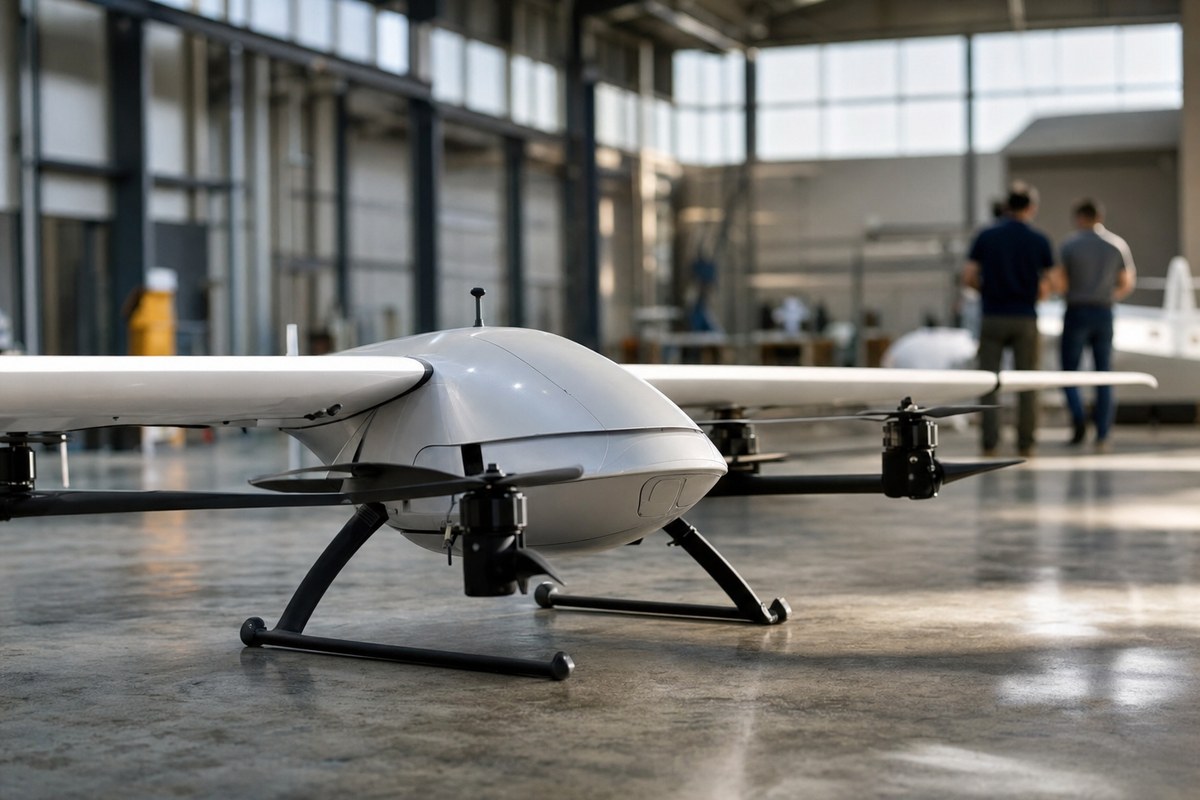
The company's publicly described product, VeriAero, is a high-precision flight-data acquisition unit that collects parameters including speed, attitude, altitude, control inputs, engine status, and aircraft response. That data feeds a flight-physics model and a 3D digital environment representing terrain, cities, airports, and vertiports. Engineers can repeatedly simulate weather changes, urban low-altitude operations, route deviations, vertiport approaches, control delays, and emergency scenarios before conducting real flights.
FLYTO draws on prior experience supplying aviation-training simulators to educational institutions in South Korea and delivering a Boeing 737NG maintenance simulator. The company recently received a Pre-A investment led by The Wells Investment through a fund operated with MYSC; the investment amount was not disclosed. FLYTO said it will use the funding to improve aircraft physics and dynamics models, expand emergency and operating scenarios, and commercialize its aviation and UAM validation platform.
Industry impact & what to watch
This case belongs to a broader move in advanced air mobility toward simulation-first development, where digital twins absorb early design iteration that would otherwise require physical prototypes and flight hours. Drone and eVTOL developers face compressed timelines and unconventional airframes that make traditional flight-test-heavy validation slower and costlier, so tools that surface control, weather, and emergency-scenario problems in software before metal flies address a real bottleneck in that segment.
The model FLYTO describes depends on converting flight data, calibrated physics models, and scenario libraries into a repeatable software-and-services product rather than a one-off engineering engagement, which is how simulation vendors typically scale beyond a single customer relationship. Its own path from training simulators and a Boeing 737NG maintenance simulator toward UAM-specific validation illustrates how simulator builders are repositioning around the newer aircraft categories entering certification queues.
What happens next depends on whether FLYTO's models and scenario libraries earn acceptance from regulators or airframe developers as credible substitutes for portions of physical test campaigns, a step the company has not yet described achieving. The scale and terms of the Pre-A round, left undisclosed, will also shape how quickly the company can expand its physics models and operating-scenario coverage.
Who this affects
- Original Equipment Manufacturers (OEM) — New digital-twin tools could let aircraft developers catch problems before physical flight tests, potentially changing how validation budgets are allocated.
- Standards & Certification Bodies — Certification bodies may need to weigh whether simulation-derived validation records from tools like this can supplement physical flight-test evidence.
- Pilot Training Organizations (PTO) — Simulator-based training providers may see new UAM-focused offerings emerge from vendors already serving pilot and maintenance training markets.
The underlying facts come from the originating publisher (linked above). The narrative, industry-impact assessment and per-role analysis below are produced independently by the AVI-GO intelligence team from public information. Cite as: AVI-GO, "South Korean Startup FLYTO Uses Digital Twins and Real Flight Data to Validate Drones and eVTOL Aircraft" news brief, 2026-08-24.
How to cite
AVI-GO, “South Korean Startup FLYTO Uses Digital Twins and Real Flight Data to Validate Drones and eVTOL Aircraft”. https://ai.avi-go.com/news/ai-news-center/news-briefs/south-korean-startup-flyto-uses-digital-twins-and-real-flight-data-to-990f5cc1ee1a04570def49bcff60ba79
Figures carry an explicit measurement window — cite the window shown on this page, not the date you retrieved it.