Oklahoma's General Aviation Airports Generate $1.3 Billion in Labor Income as Broken Arrow Weighs Feasibility Study
A National Business Aviation Association study found Oklahoma general aviation supports 18,800 jobs and $1.3 billion in labor income, as Broken Arrow considers a $150,000 feasibility study for a new general aviation airport.
Original report
basentinel.com
Industry impact
The dispute underscores how hangar capacity constraints near growing metro areas are pushing communities to weigh new general aviation infrastructure against long, costly approval timelines.
A national study by the National Business Aviation Association found that general aviation in Oklahoma supports 18,800 total jobs — 5,700 direct and 11,500 indirect — and contributes $1.3 billion in labor income, accounting for 0.8% of the state's employment, slightly above the U.S. average. The figures emerge amid debate in Broken Arrow, Oklahoma, which announced in December it may explore building a general aviation airport, and has posted a request for proposals for a feasibility study estimated to cost taxpayers approximately $150,000; a winning bidder could be presented to the City Council as soon as next month, with the study, if authorized, taking one year to cover aviation activity forecasts, site area reviews, a recommended development plan, grant evaluation and a final report.
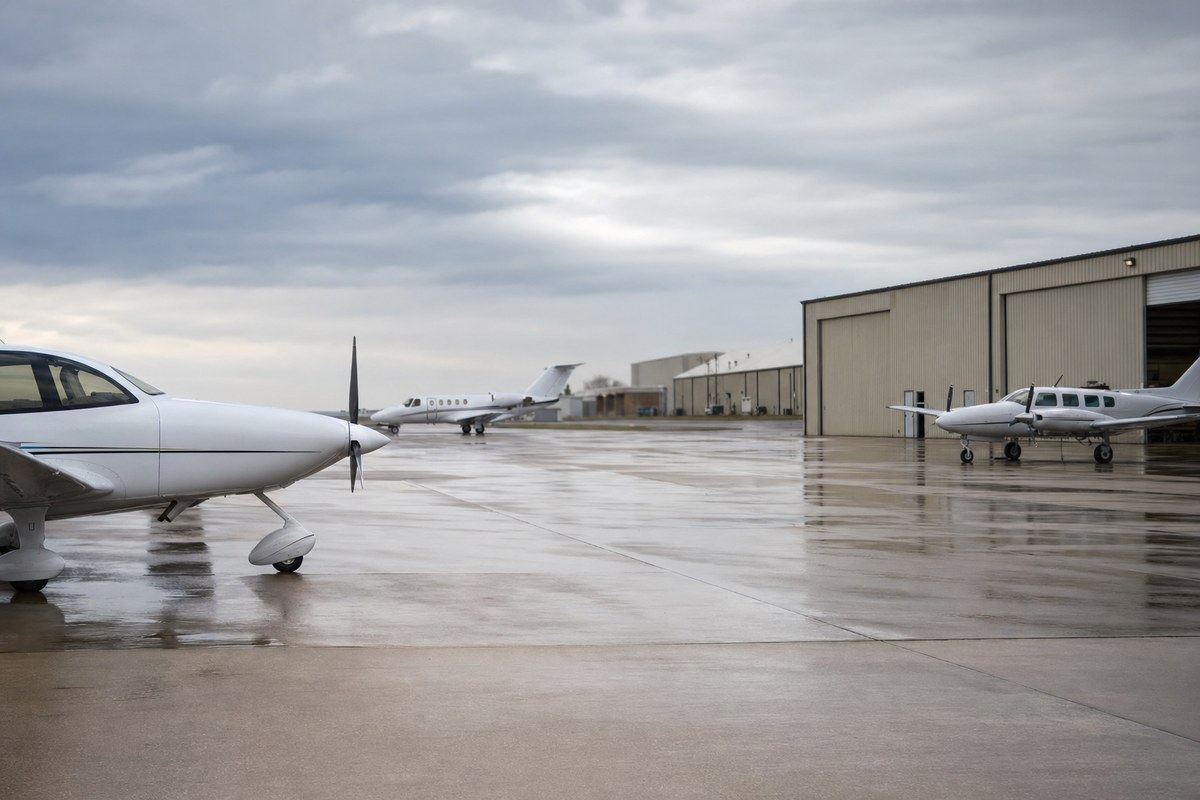
City Manager Michael Spurgeon said the focus is on a small airport for private planes and corporate jets rather than commercial aviation, noting Broken Arrow's population has quadrupled since a similar study was done in 1980, and that local pilots are parking planes as far away as Northwest Arkansas due to hangar waiting lists at nearby airports. The Alliance for Aviation Across America states that general aviation airports within 100 miles of Broken Arrow, across Oklahoma, Arkansas and Kansas, employ more than 5,700 people, generate $260 million in payroll and produce a $1.1 billion economic impact; Oklahoma has 135 public-use airports serving 9,778 pilots and 6,063 registered aircraft, and a 2017 Oklahoma Aviation Commission study found publicly-owned general aviation airports statewide support 6,300 jobs, $270 million in annual payroll and $693 million in annual economic activity.
Tulsa Riverside Airport, the busiest in Oklahoma, supports 545 direct jobs, 340 indirect jobs, $59 million in total spending, $94 million in direct and indirect economic impact, and $4.7 million in annual state and local tax revenues. If Broken Arrow proceeds, a bond issue before voters could come as late as 2036, and any airport requiring an FAA permit would also need years of environmental and safety studies; Assistant City Manager Kenneth Schwab noted the study could show the opportunity has passed, or that a viable business model exists, particularly with corporate partners.
The underlying facts come from the originating publisher (linked above). The narrative, industry-impact assessment and per-role analysis below are produced independently by the AVI-GO intelligence team from public information. Cite as: AVI-GO, "Oklahoma's General Aviation Airports Generate $1.3 Billion in Labor Income as Broken Arrow Weighs Feasibility Study" news brief, 2026-08-24.
How to cite
AVI-GO, “Oklahoma's General Aviation Airports Generate $1.3 Billion in Labor Income as Broken Arrow Weighs Feasibility Study”. https://ai.avi-go.com/news/ai-news-center/news-briefs/oklahoma-s-general-aviation-airports-generate-1-3-billion-in-labor-inc-c0d3c222144f2a9a039beda0eabf05fa
Figures carry an explicit measurement window — cite the window shown on this page, not the date you retrieved it.