Indian Airlines Face Nearly $2 Billion in Losses as Pakistan Extends Airspace Ban to September 2026
Pakistan has extended its airspace ban on Indian-registered and Indian-operated aircraft to September 24, 2026, pushing India's aviation industry losses to roughly $2 billion.
Original report
gnnhd.tv
Industry impact
Prolonged airspace restrictions force scheduled and non-scheduled operators alike into longer reroutes, converting a political closure into a sustained cost and duty-time burden across the affected carriers.
What happened
Pakistan's closure of its airspace to Indian aircraft has cost India's aviation industry approximately $2 billion, according to figures cited by the Pakistan Airports Authority (PAA) and World Flight Information, with the restriction now extended until September 24, 2026 under the PAA's latest NOTAM.
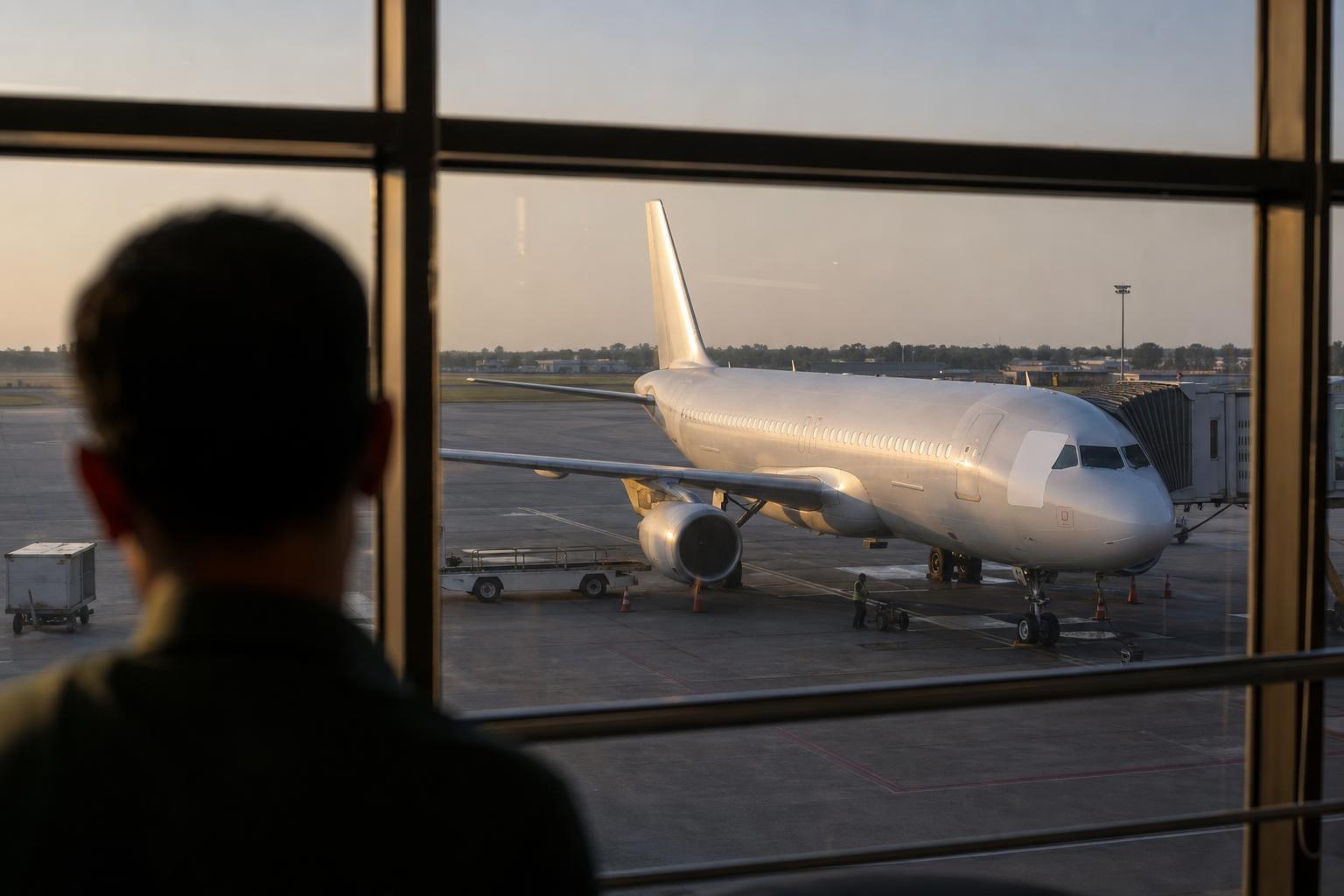
Pakistan first imposed the ban on April 24, 2025, following the Pahalgam attack and the escalation in tensions between Islamabad and New Delhi. The restriction applies to Indian-registered aircraft and to any aircraft operated, owned, or leased by Indian airlines, and also covers military flights. Approximately 800 weekly flights have been affected by the closure, with Delhi's Indira Gandhi International Airport suffering the largest impact at around 640 weekly flights disrupted. Routes to the United States, the United Kingdom, Frankfurt, Istanbul, and Almaty have been particularly affected.
The five major Indian carriers bearing the brunt of the disruption are [Air India](/entities/6fd6edb6992d570da52b2274aba01cff), IndiGo, [Air India Express](/entities/a473d7faea2c58108297874473fb489a), [Akasa Air](/entities/a6fc533891795c38924ba8a9a7df2839), and [SpiceJet](/entities/2d1d476754a95c7297000dfc252441b5), with Air India reported as the most severely affected. Airlines have been forced to reroute international operations through Iranian and Gulf airspace, adding roughly one to two additional hours to flights serving the UK and Europe, and up to three additional hours on flights to the United States and Canada. The longer routes have increased fuel consumption and crew costs, and airlines face additional expenses for refuelling, landing, take-off, and parking at intermediate airports, along with additional duty hours for cabin and operational crew. India's rating agency ICRA has warned that Indian airlines could face a further $600 million in losses in 2026 if the disruption continues. By contrast, only around six Pakistan-origin services, operating towards Malaysia and Thailand, had previously relied on Indian airspace, and these have since been rerouted. The PAA confirmed that restrictions remain in force until at least September 24, 2026.
Industry impact & what to watch
A bilateral airspace closure of this scale shows how a single restriction can reshape route economics across an entire national carrier base rather than one operator. Because the ban covers any aircraft operated, owned, or leased by Indian airlines, not just Indian-registered tails, it reaches beyond the flag carrier to every operator flying under that ownership or lease structure.
Long-haul scheduled operations absorb reroute costs through fuel burn, crew duty limits and intermediate-stop fees, and those costs compound the longer a closure persists, as ICRA's forward loss estimate illustrates. Instability in alternative corridors through the Middle East adds a further layer of routing risk on top of the Pakistan closure itself, narrowing the options carriers have for absorbing the diversion cheaply.
The PAA has set September 24, 2026 as the current expiry of the NOTAM, and whether it lapses, renews, or is narrowed will determine if the $2 billion figure keeps growing toward ICRA's additional $600 million projection for the year.
Who this affects
- Business Charter Operators — Charter flights tied to Indian-owned or Indian-leased aircraft face the same rerouting and added flight hours as scheduled carriers on Europe and North America corridors.
- Charter Brokers — Clients booked on Indian-linked aircraft toward Europe or North America face added flight hours, while routing through a non-Indian-registered operator avoids the restriction.
- Commercial Airports — Delhi's Indira Gandhi International Airport carries the bulk of the roughly 800 weekly flights disrupted by the closure.
The underlying facts come from the originating publisher (linked above). The narrative, industry-impact assessment and per-role analysis below are produced independently by the AVI-GO intelligence team from public information. Cite as: AVI-GO, "Indian Airlines Face Nearly $2 Billion in Losses as Pakistan Extends Airspace Ban to September 2026" news brief, 2026-08-24.
How to cite
AVI-GO, “Indian Airlines Face Nearly $2 Billion in Losses as Pakistan Extends Airspace Ban to September 2026”. https://ai.avi-go.com/news/ai-news-center/news-briefs/indian-airlines-face-nearly-2-billion-in-losses-as-pakistan-extends-ai-0f2070873d931b46e7320bac24cc230c
Figures carry an explicit measurement window — cite the window shown on this page, not the date you retrieved it.