Greece's Tourism Boom Strains Athens Air Traffic Control as Flights Surge 40% Above 2019 Levels
Greek air traffic controllers say Athens-area airspace is overloaded as southeast European traffic runs about 40 percent above 2019 levels, with the control centre staffed at 154 of a needed 250 controllers.
Original report
www.fox26medford.com
Industry impact
Chronic controller shortages against surging traffic show how quickly a peak-season capacity gap can turn into systemic delay and diversion risk across a whole air navigation region.
What happened
Air traffic controllers at the Greek Civil Aviation Authority in Athens say they are struggling to manage a sharp rise in flights tied to a tourism boom. During the first week of July, Greek airports handled an average of 2,700 flights per day, compared with 1,000 to 1,500 flights per day in the low season. Eurocontrol says overall air traffic in southeast Europe, which includes Greek airspace, has risen approximately 40 percent compared with 2019.
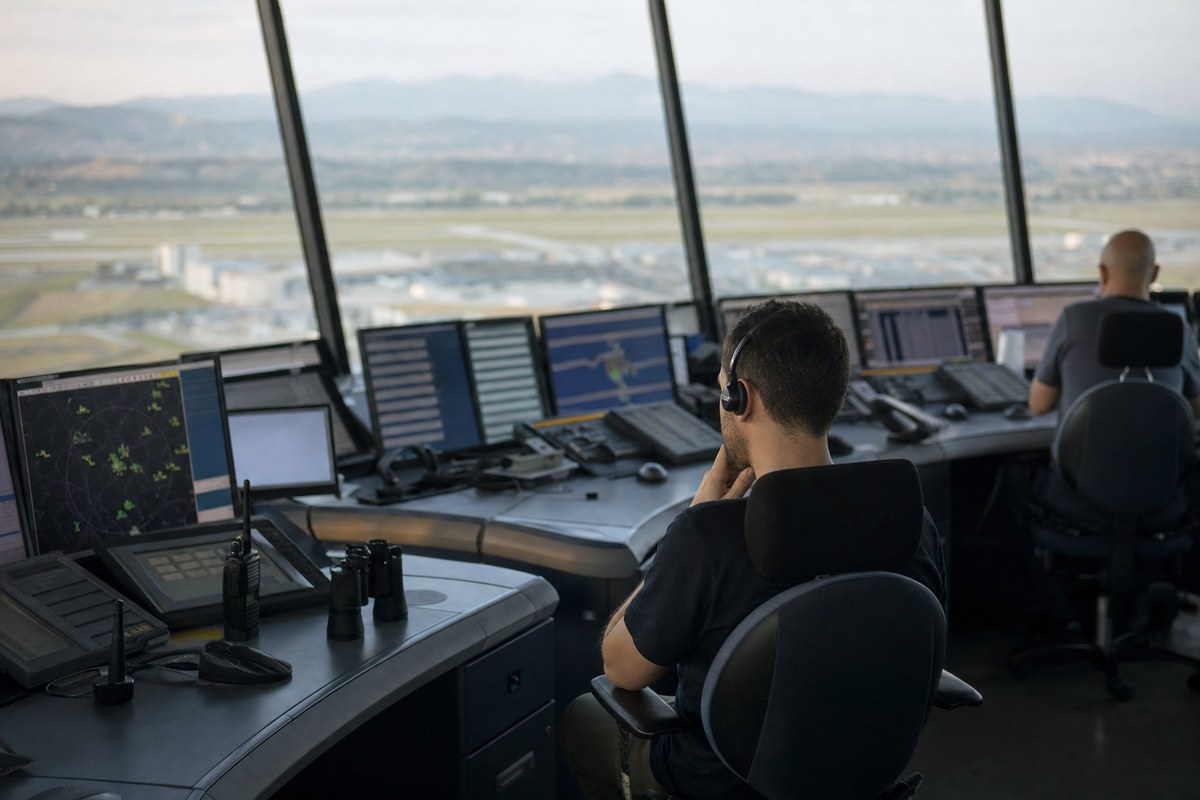
Tourist arrivals in Greece last year reached 38 million, 23 percent above the 2019 pre-pandemic peak, in a country with a population of around 10 million. "Look at this sky, it's crazy, there's no room for any more planes!" said Olga Toki, vice-president of the Association of Air Traffic Controllers of Greece. Shift supervisor Giorgos Stamoulakatos said the control centre has 154 controllers but needs 250; Greek airspace is divided into 10 sectors, each managed by a controller assisted by an aide.
A January 4 communication system failure cut contact between controllers and pilots and forced Greek airspace to close for hours, triggering a chain of cancellations and diversions to neighbouring countries and exposing infrastructure weaknesses. That incident prompted the announcement of a renovation programme costing around 300 million euros (approximately $350 million), including new digital communication systems and replacement of ageing radar; work on the new systems began in mid-August, with the full project expected to be completed by 2028. Separately, the European Commission last year brought a case before the Court of Justice of the European Union, reproaching Greece for failing to bring its navigation procedures in line with the global Performance-Based Navigation standard.
Industry impact & what to watch
This case shows how a tourism-driven demand spike can outrun the staffing and infrastructure plans of a national air navigation provider, turning a seasonal peak into a recurring capacity crisis rather than a one-off event. Air traffic control capacity is built years ahead on projected sector loads and controller headcount; when arrivals climb 23 percent past a prior peak and traffic runs 40 percent above 2019 levels, a shortfall of nearly 100 controllers against the stated requirement becomes the binding constraint on how many flights the airspace can safely absorb, regardless of aircraft or airline capacity.
The January 4 communication failure illustrates the operational risk of running near capacity on ageing systems, and the resulting closure shows how quickly a single technical fault can cascade into cancellations and diversions across a wider region. The 300 million euro renovation, including new digital communication systems and radar replacement, is not due for completion until 2028, leaving several more peak seasons to pass before the underlying infrastructure gap closes.
The pending Court of Justice case over Performance-Based Navigation compliance is a separate track worth watching, since a ruling against Greece could force procedural changes on top of the physical upgrades already under way. Whether the controller shortfall narrows before the 2028 completion date, and how the system performs through the next several peak summers, will show whether the current strain is a temporary bottleneck or a structural limit on Greek airspace capacity.
Who this affects
- Business Charter Operators — Peak-season Greek airspace congestion and a controller shortfall raise delay and diversion risk for flights routed through the region.
- Charter Brokers — Clients booking Greek trips during peak weeks may face delay or diversion risk that will persist until infrastructure upgrades finish by 2028.
- Commercial Airports — Greek airports face repeated peak-season strain until controller staffing and the 300 million euro system renovation catch up with demand.
- Air Traffic Management (ATM) Authorities — Greece's civil aviation authority must close a near-100-controller staffing gap and complete a 300 million euro system overhaul by 2028 while defending a EU court case.
The underlying facts come from the originating publisher (linked above). The narrative, industry-impact assessment and per-role analysis below are produced independently by the AVI-GO intelligence team from public information. Cite as: AVI-GO, "Greece's Tourism Boom Strains Athens Air Traffic Control as Flights Surge 40% Above 2019 Levels" news brief, 2026-08-24.
How to cite
AVI-GO, “Greece's Tourism Boom Strains Athens Air Traffic Control as Flights Surge 40% Above 2019 Levels”. https://ai.avi-go.com/news/ai-news-center/news-briefs/greece-s-tourism-boom-strains-athens-air-traffic-control-as-flights-su-01f7dceb92784672ccac6e8ef6f5bfd2
Figures carry an explicit measurement window — cite the window shown on this page, not the date you retrieved it.