Dubai Opens World's First Purpose-Built eVTOL Vertiport as Infrastructure Race Heats Up
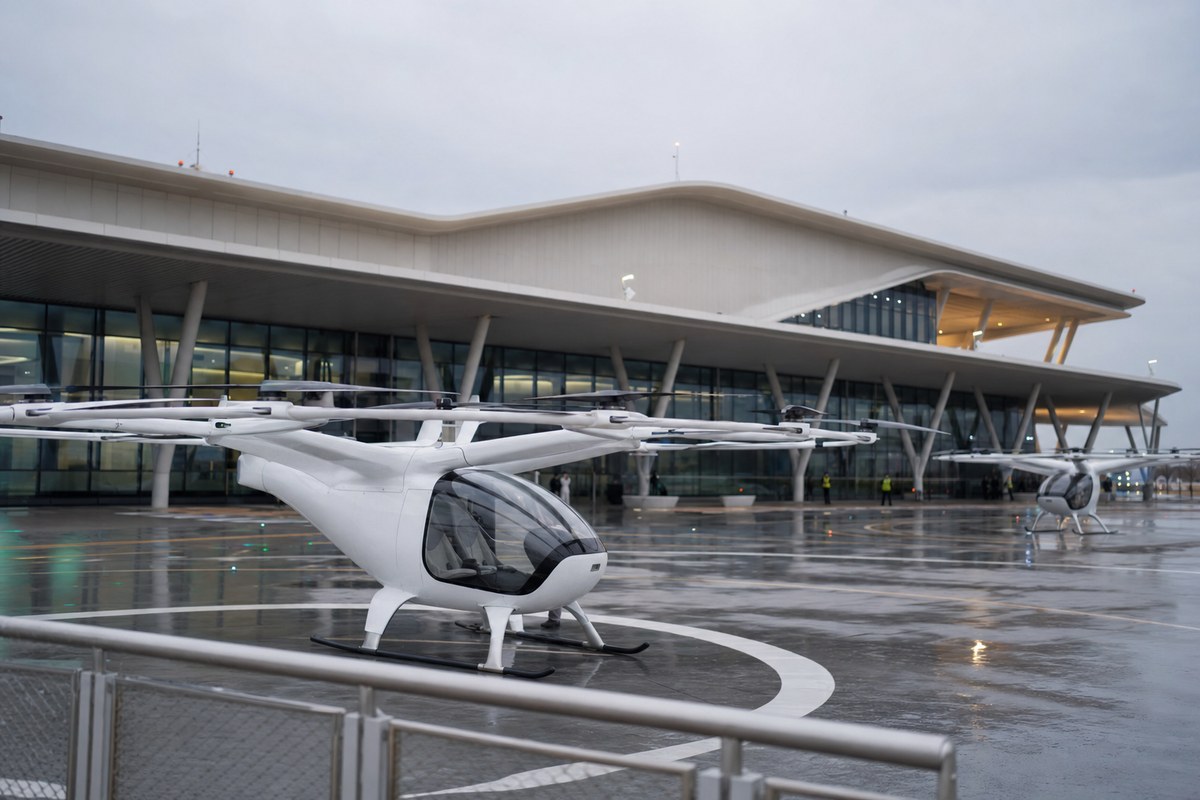
Skyports Infrastructure and Dubai's Roads and Transport Authority opened a 33,400-square-foot purpose-built eVTOL vertiport in July, designed for 170,000 passengers and 42,000 aircraft movements annually.
Original report
robbreport.com
Industry impact
The split between purpose-built vertiports and converted heliports shows advanced air mobility infrastructure developing along two parallel tracks with different cost, speed and location trade-offs.
What happened
Dubai opened what is described as the world's first purpose-built eVTOL vertiport in July, developed by Skyports Infrastructure in partnership with Dubai's Roads and Transport Authority. The 33,400-square-foot facility includes a passenger terminal, a flight operations center, two takeoff-and-landing pads, and Joby's Global Electric Aviation Charging System. It is designed to handle 170,000 passengers and 42,000 aircraft movements annually, and is expected to welcome its first electric air taxi flights soon. Dubai plans to add three more vertiports across the city.
Separately, Blade Air Mobility founder and CEO Rob Wiesenthal argues that upgrading existing helicopter infrastructure with charging systems is the fastest path to launching eVTOL service, pointing to Manhattan, Los Angeles and the South of France as high-friction transportation markets suited to short air hops. One concrete project cited is Park Elm Residences at Century Plaza in Los Angeles, where an existing heliport is being converted into a Joby vertiport with a dedicated Blade lounge. Wiesenthal also envisions future purpose-built vertiports with private security, baggage handling, lounges, and rooftop facilities at luxury residential developments.
On the regulatory and research side, Florida has constructed two vertiports at its SunTrax testing campus and is planning a statewide AAM network. The FAA and the Department of Transportation have broken ground on an AAM research facility in Oklahoma City to study how electric air taxis will integrate into the national airspace system.
Industry impact & what to watch
Dubai's project and the heliport-conversion approach championed by Blade represent two competing routes to the same goal: getting eVTOL passenger service off the ground before the aircraft themselves are certified for commercial use in most markets. Purpose-built sites like Dubai's can be sized for scale from day one, with dedicated charging and operations infrastructure, while conversions let operators reach market faster by reusing existing heliport locations and permits in dense, high-value corridors.
How this segment develops depends on which approach proves cheaper and faster to replicate. A single 33,400-square-foot facility built for 170,000 passengers a year is a heavy capital commitment that only certain cities or developers will replicate quickly, whereas retrofitting a heliport with a charging system is a lower-cost, incremental step that established heliport operators and property developers can take without waiting for a purpose-built site.
The near-term signal to watch is whether Dubai's vertiport actually begins commercial electric air taxi flights, and whether Florida's SunTrax and Oklahoma City research work translate into airspace-integration rules that let either infrastructure model scale beyond a single site.
Who this affects
- Helicopter Airports — A purpose-built facility sized for 170,000 passengers a year and a heliport-conversion project in Los Angeles now offer heliport and vertiport operators two different infrastructure models to weigh.
- Air Traffic Management (ATM) Authorities — Regulatory test sites in Florida and Oklahoma City are being built specifically to study how electric air taxis will fit into national airspace rules.
The underlying facts come from the originating publisher (linked above). The narrative, industry-impact assessment and per-role analysis below are produced independently by the AVI-GO intelligence team from public information. Cite as: AVI-GO, "Dubai Opens World's First Purpose-Built eVTOL Vertiport as Infrastructure Race Heats Up" news brief, 2026-08-24.
How to cite
AVI-GO, “Dubai Opens World's First Purpose-Built eVTOL Vertiport as Infrastructure Race Heats Up”. https://ai.avi-go.com/news/ai-news-center/news-briefs/dubai-opens-world-s-first-purpose-built-evtol-vertiport-as-infrastruct-38d3d879070a98084c3e5485669b079e
Figures carry an explicit measurement window — cite the window shown on this page, not the date you retrieved it.