Boom Supersonic Offers $800,000 Prize for Amateur RC Aircraft to Break Sound Barrier
Boom Supersonic launched The Boom Prize, offering $800,000 to the first amateur team to fly a remotely piloted, air-breathing aircraft past the speed of sound.
Original report
avioradar.net
Industry impact
The contest signals an effort to seed grassroots supersonic engineering talent and public interest, echoing past aviation prizes that spurred private technological advances.
Boom Supersonic has launched a competition called The Boom Prize, offering $800,000 to the first amateur team to fly a remotely piloted, air-breathing aircraft beyond the speed of sound in level flight. The prize consists of $750,000 in cash and $50,000 worth of Boom equity, awarded to only one winning team, with the pool potentially growing through additional sponsorship.
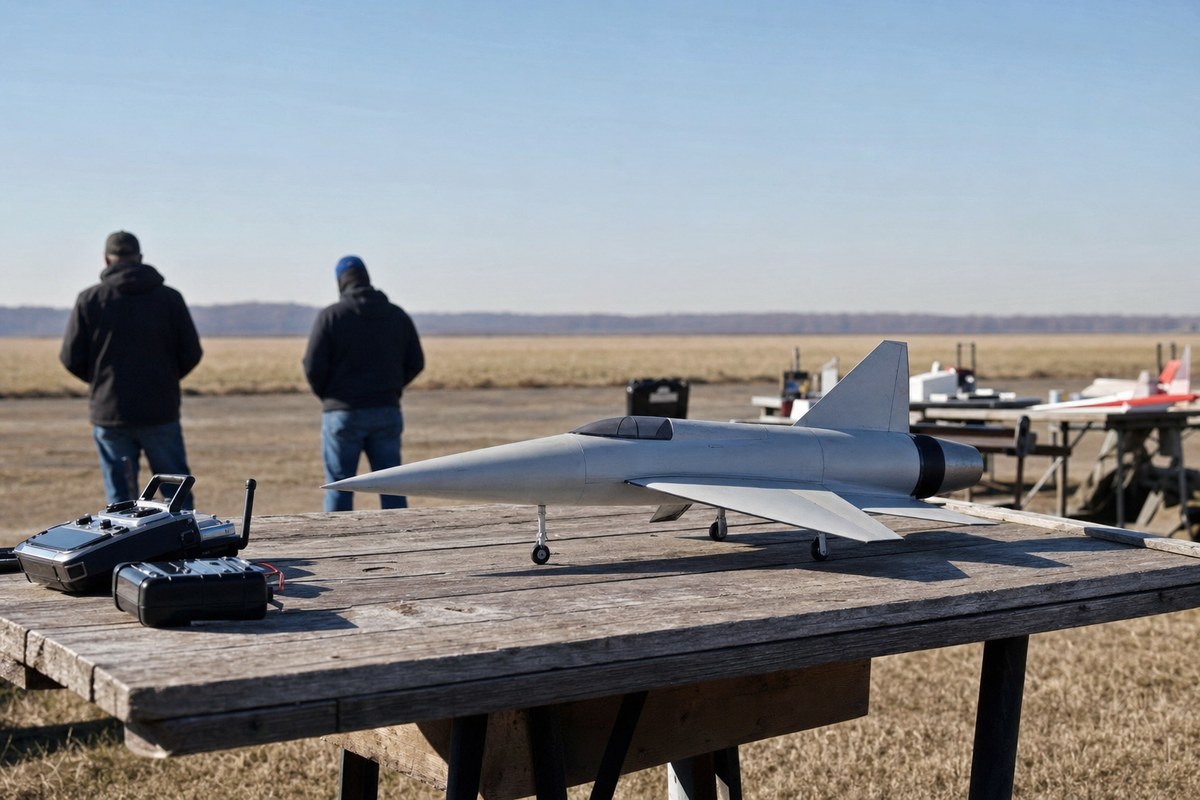
To win, teams must achieve a true airspeed above the local speed of sound, sustain supersonic flight for at least five seconds, and accelerate from Mach 0.8 to beyond Mach 1 in level flight or while climbing, with diving prohibited. The aircraft must then land and take off again the same day to repeat the flight in the opposite direction, with both attempts occurring between sunrise and sunset in front of judges. Maximum take-off weight including fuel is capped at 25 kilograms, and the entry must be a fixed-wing aircraft using turbojet, turbofan, or ramjet propulsion, with rocket engines prohibited. Speed verification requires a calibrated pitot-static system, total-air-temperature measurement, sealed data logs, and GPS telemetry.
Entry is limited to U.S. citizens or permanent residents, with corporate entries, venture-capital financing, corporate sponsorship, institutional investment, and government funding prohibited, though personal funds, donations, and crowdfunding are allowed. The judging panel includes Jared Isaacman, Phil Condit, Tom Mueller, and Scott Manley. Boom compares the competition to historical prizes such as the Orteig Prize, won by Charles Lindbergh in 1927, the Kremer Prize, and the Ansari X Prize. The contest follows the conclusion of Boom's XB-1 demonstrator programme, which broke the sound barrier on January 28, 2025, and reached Mach 1.18 at 36,514 feet on February 10, 2025, before Boom shifted focus to its Overture passenger aircraft.
The underlying facts come from the originating publisher (linked above). The narrative, industry-impact assessment and per-role analysis below are produced independently by the AVI-GO intelligence team from public information. Cite as: AVI-GO, "Boom Supersonic Offers $800,000 Prize for Amateur RC Aircraft to Break Sound Barrier" news brief, 2026-08-24.
How to cite
AVI-GO, “Boom Supersonic Offers $800,000 Prize for Amateur RC Aircraft to Break Sound Barrier”. https://ai.avi-go.com/news/ai-news-center/news-briefs/boom-supersonic-offers-800-000-prize-for-amateur-rc-aircraft-to-break-329e17c01a5fd60496e65fc80e085835
Figures carry an explicit measurement window — cite the window shown on this page, not the date you retrieved it.