Boeing's Engineering and Technicians Union Rejects Contract Offer, Authorizes Strike
SPEEA members rejected Boeing's contract offer and authorized a strike, with 92% of roughly 17,000 eligible engineers, scientists, analysts and technicians voting before the October 6 contract expiration.
Original report
www.seattletimes.com
Industry impact
The vote shows that even a large compounding wage package cannot resolve labor disputes rooted in trust, signaling that OEM production stability now hinges on management credibility as much as pay.
What happened
The Society of Professional Engineering Employees in Aerospace, Boeing's white-collar union, voted Friday to reject the company's contract offer and authorize its negotiating team to call for a strike. Both of SPEEA's main units voted no: 64% of the professional unit and nearly 72% of the technical unit rejected the deal, while strike authorization passed with nearly 88% support in the professional unit and nearly 90% in the technical unit. Overall, 92% of eligible members cast ballots.
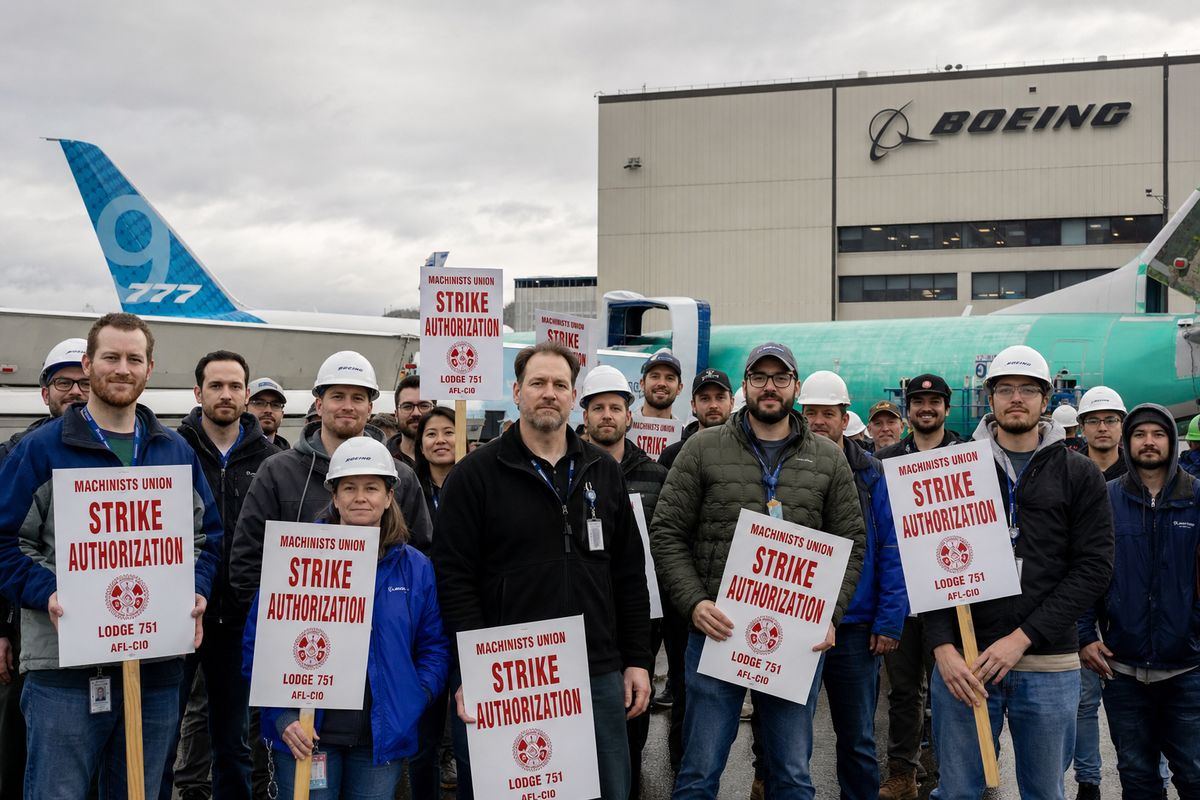
SPEEA represents approximately 17,000 employees at Boeing facilities in Washington state and nearby states, including about 13,000 engineers and scientists in its professional unit and about 4,000 analysts, technicians, planners and specialists in its technical unit. The union said it will seek to resume negotiations with Boeing, and if a strike is called, it would not begin until the current contract expires on October 6.
Boeing and SPEEA began full contract negotiations on July 1, the first time in nearly 14 years. At the end of July, the two sides reached a tentative agreement offering compounding wage increases of up to 31.9% over the life of the contract, including a 3% general wage increase retroactive to February 20, 2026, a 6% wage pool increase in March 2027, and 5% annual increases through 2030. The deal also included additional vacation days, limits on mandatory overtime, and twice-annual meetings with Boeing executives. SPEEA's negotiating team had unanimously endorsed the offer, but the union said rank-and-file members 'deeply mistrust Boeing management,' citing past decisions to move engineering work out of Washington, concerns that quality and safety were deprioritized in favor of faster production, and wages that failed to keep pace with inflation.
How it unfolded
Industry impact & what to watch
A negotiating team's unanimous endorsement of a rich wage package still failing at the ballot box shows that labor settlements in aerospace manufacturing now turn on accumulated trust as much as on compensation math. Engineering and technical staff at large OEMs hold specialized skills that are slow to replace, so a rejected offer from a unit this size carries direct exposure for production schedules tied to their sign-off on design, quality and certification work.
Unions representing engineering and technical staff typically weigh pay against job-security history and safety culture, and SPEEA's members here explicitly cited past relocation of engineering work and perceived pressure to prioritize speed over quality as reasons the wage numbers were not enough. That dynamic means a management team cannot assume a generous compounding percentage alone will clear a ratification vote once workforce confidence has eroded.
Whoever leads the next round of talks and what concessions beyond pay are offered will determine whether a strike materializes after October 6. SPEEA has said it will seek to resume negotiations, so the next dated marker to watch is whether a revised offer emerges before the current contract lapses.
Who this affects
- Original Equipment Manufacturers (OEM) — A possible strike after October 6 by nearly 17,000 Boeing engineering and technical staff could disrupt design and certification work supporting aircraft programs.
- Aviation Manufacturing Supply Chain — Suppliers tied to Boeing's Washington operations face potential disruption if engineering and technical staff strike after the contract expires October 6.
The underlying facts come from the originating publisher (linked above). The narrative, industry-impact assessment and per-role analysis below are produced independently by the AVI-GO intelligence team from public information. Cite as: AVI-GO, "Boeing's Engineering and Technicians Union Rejects Contract Offer, Authorizes Strike" news brief, 2026-08-23.
How to cite
AVI-GO, “Boeing's Engineering and Technicians Union Rejects Contract Offer, Authorizes Strike”. https://ai.avi-go.com/news/ai-news-center/news-briefs/boeing-s-engineering-and-technicians-union-rejects-contract-offer-auth-5ae947b0ce2fd28cd30ba50538339ccc
Figures carry an explicit measurement window — cite the window shown on this page, not the date you retrieved it.