Aviation Study Warns Automation in Air Traffic Control Is Outpacing Safety Regulation
A doctoral study of air traffic controllers across seven countries found automation bias, skill erosion and non-interoperable systems, alongside a 69% rise in South African general aviation accidents in 2021-2022.
Original report
www.modernghana.com
Industry impact
Air traffic automation is spreading faster than certification and training regimes can absorb, leaving controllers to invent manual workarounds that regulators have not standardised or reviewed.
What happened
A doctoral study conducted by a former South African air traffic services officer who worked in Johannesburg surveyed air traffic controllers from the United States, Canada, Europe, the United Kingdom, New Zealand, the United Arab Emirates and South Africa, examining automated air traffic control systems and the regulatory frameworks that govern them.
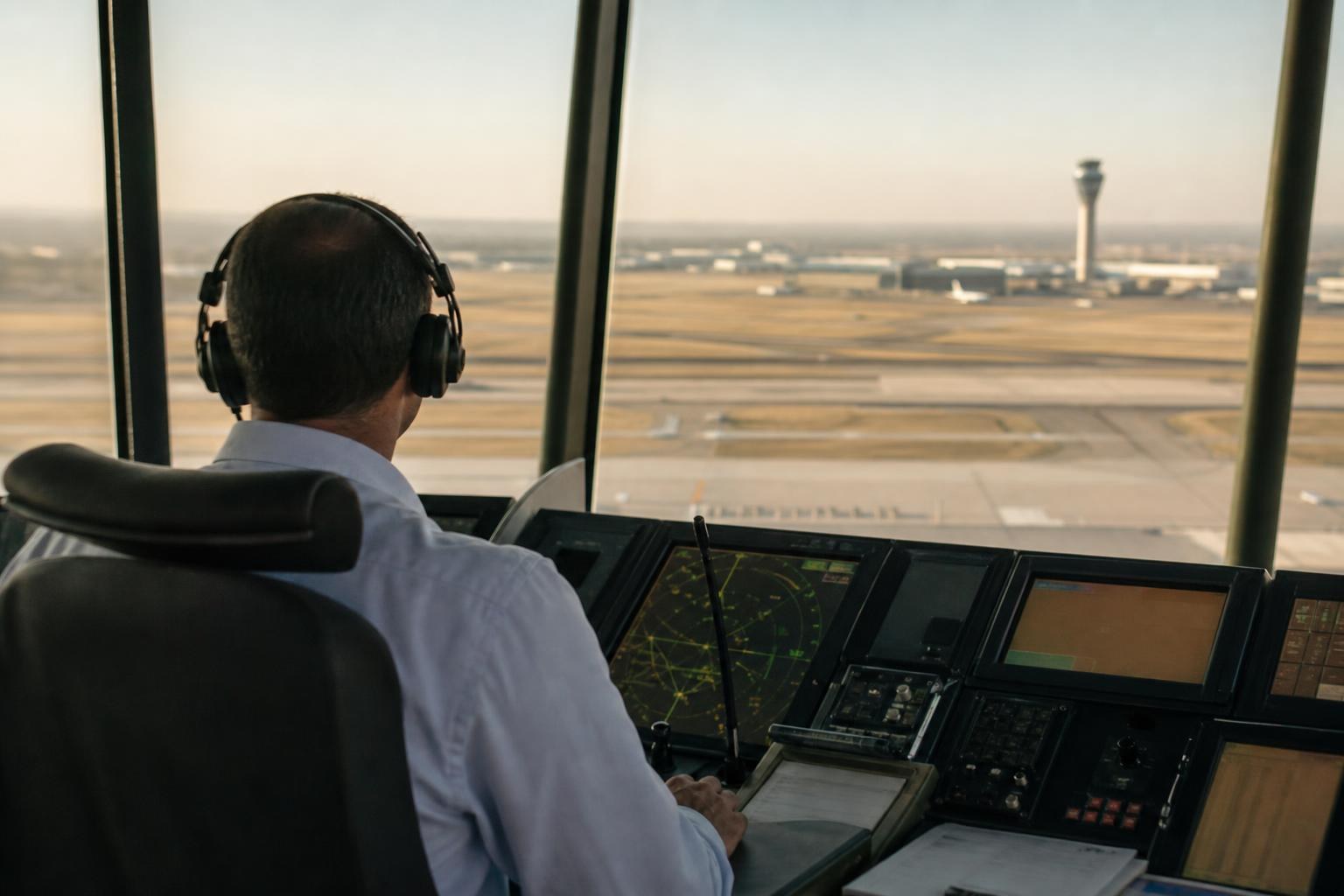
The survey identified automation bias, declining situational awareness, complacency and erosion of manual control skills among controllers, along with automation failures that sharply increased workload. Surveyed controllers said they did not trust artificial intelligence to perform their work, yet none could identify how AI was already being used in their daily operations. In South Africa, general aviation accidents rose 69% and incidents rose 77% in 2021-2022 compared with the previous year, and air traffic controllers' incident and confidential hazard reports increased significantly in 2023-2024, according to data cited in the study.
The research found that training programmes did not fully prepare controllers for automated systems and that procedures designed for older systems did not align with newer technology's capabilities. Most controllers surveyed confirmed that automated systems were not interoperable, leading them to use nonstandard procedures and manual workarounds that contributed to incidents such as reduced separation between aircraft. The study noted that the International Civil Aviation Organisation cannot keep pace with the speed of technological change because of the length of its standard-setting processes, that no explicit international standard currently requires automated air traffic control systems or AI to be certified by national regulators, and that the European Union Aviation Safety Agency only proposed a new regulatory framework for certifying such systems in 2023.
Industry impact & what to watch
The study describes a gap that recurs whenever a safety-critical system evolves faster than the bodies certifying it: controllers adopt tools operationally before regulators have finished writing the rules for them, and workarounds fill the space in between. That gap is what produced the nonstandard procedures the survey documents, including cases tied to reduced separation.
Air traffic services sit on national certification chains that trace back to standards set by the International Civil Aviation Organisation, so a slow-moving international process leaves individual states to decide, unevenly, how much automation to trust and how to train controllers against it. The finding that controllers do not trust AI yet cannot say where it already touches their work points to a training and disclosure gap inside air navigation service providers themselves, separate from any question of the technology's reliability.
The European Union Aviation Safety Agency's 2023 proposal for certifying such systems is the one concrete regulatory step named in the study, and how it develops will indicate whether other national authorities, including South Africa's Civil Aviation Authority, move to align their own frameworks or continue relying on procedures built for older systems.
Who this affects
- Air Traffic Management (ATM) Authorities — Air navigation authorities face a documented gap between deployed automation and the certification standards meant to govern it.
- Aviation Associations — Trade associations gain survey-based evidence of automation risk to press into ongoing certification-framework discussions.
- Commercial Airports — Airports served by automated air traffic systems face scrutiny tied to South Africa's documented rise in incidents and accidents.
The underlying facts come from the originating publisher (linked above). The narrative, industry-impact assessment and per-role analysis below are produced independently by the AVI-GO intelligence team from public information. Cite as: AVI-GO, "Aviation Study Warns Automation in Air Traffic Control Is Outpacing Safety Regulation" news brief, 2026-08-24.
How to cite
AVI-GO, “Aviation Study Warns Automation in Air Traffic Control Is Outpacing Safety Regulation”. https://ai.avi-go.com/news/ai-news-center/news-briefs/aviation-study-warns-automation-in-air-traffic-control-is-outpacing-sa-a0cc00f4d57e805205d91a8d40eee142
Figures carry an explicit measurement window — cite the window shown on this page, not the date you retrieved it.