Aviation MRO Sector Faces Acute Talent Shortage as Global Spending Heads Toward $193 Billion by 2030
Global MRO spending is projected to rise from $136 billion to nearly $193 billion by 2030 as a worsening technician shortage leaves North America alone short of roughly 17,000 aircraft mechanics.
Original report
www.aerotime.aero
Industry impact
Rising maintenance demand is colliding with a shrinking technician workforce, turning hangar staffing into a capacity constraint that shapes aircraft availability as much as parts supply does.
What happened
Global MRO spending is projected to climb from $136 billion to nearly $193 billion by 2030, driven by aging fleets flying five to seven years longer than originally planned, deferred maintenance, and a 40% increase in C/D check demand since Q1 2026. Engine MRO backlogs have reached record levels, with more than 648 aircraft powered by next-generation GTF engines — including the A320neo, A220, and E-Jets E2 — grounded awaiting maintenance in 2025. Industry estimates place engine shop backlog-related losses at around $11 billion, overall MRO shortage costs at more than $27 billion annually, and the Aeronautical Repair Station Association pegs workforce-related losses at approximately $14 billion per year. Maintenance hours are forecast to grow from 310 million per year to 565 million per year.
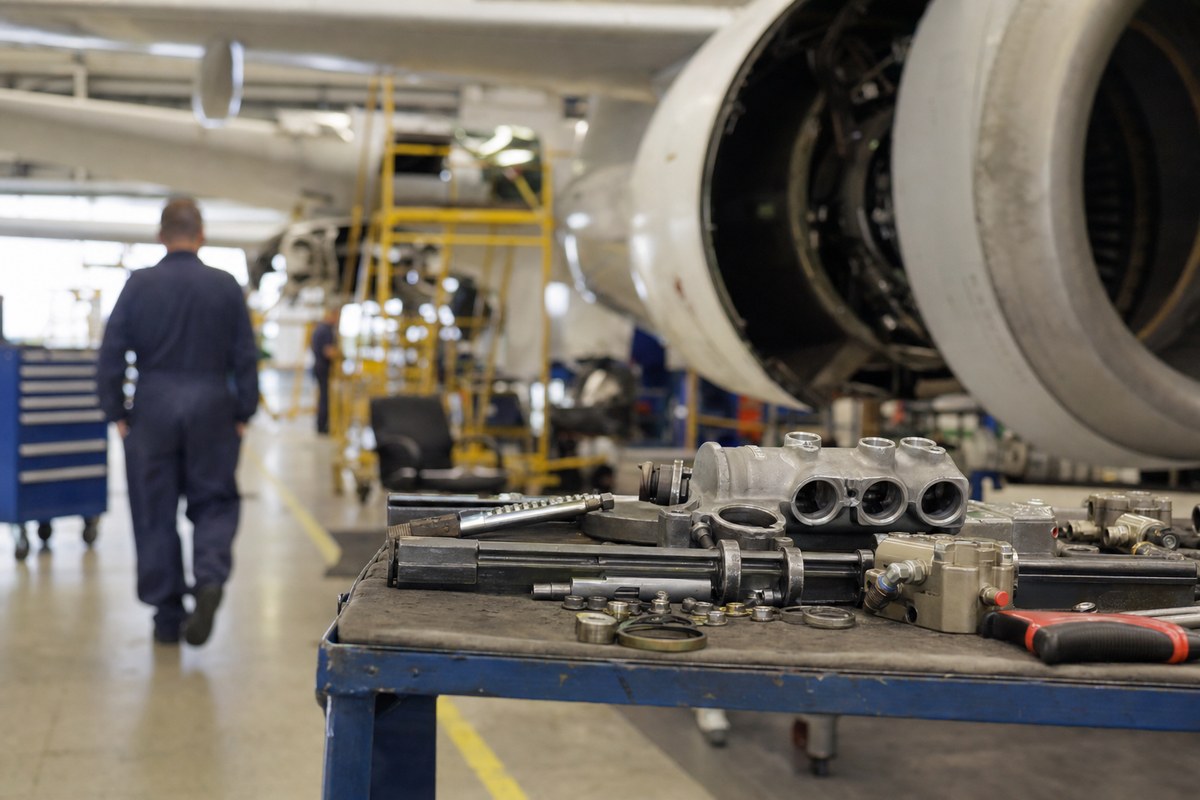
North America alone faces a shortage of approximately 17,000 aircraft mechanics, a figure that could reach 30,000 by 2028. An estimated 83% of current technicians are expected to retire within ten years, around 700,000 engineers will be needed globally by 2040, and Boeing projects a worldwide need for 716,000 new technicians over the next 20 years.
Facility expansions are generating large-scale hiring. FL Technics' new hangar in Punta Cana, Dominican Republic, attracted more than 3,500 job applicants against plans to hire 300 people initially and up to 2,000 over several years. Safran's hub in Querétaro, Mexico, is set to create more than 450 new jobs and test up to 350 engines yearly by 2030. Lufthansa Technik has broken ground on a 55,000-square-metre facility in Santa Maria da Feira, near Porto, Portugal, expected to create around 700 skilled MRO jobs when operations begin in 2028. [Frontier Airlines](/entities/4fb6f79ae9bd5ebe969134bc1fcfac9c) partnered with Aims Community College to launch an FAA Part-147 aircraft maintenance technician programme offering a $25,000 signing bonus for eligible graduates, [Iberia](/entities/1164d356cfda5cb9bcb68b9b87f77683) launched a recruitment drive for EASA Part-66 B1/B2 certifying staff to support its Flight Plan 2030 targeting a long-haul fleet of 70 aircraft centred on the Madrid-Barajas hub, and [Etihad Airways](/entities/0f7894c2662d5a1e91f833b97fb60589) has expanded hiring for licensed aircraft engineers with seven to ten years of experience.
Industry impact & what to watch
The shortage sits upstream of aircraft availability rather than beside it: when engine shops and heavy-check lines cannot staff up, grounded aircraft and delayed checks show up as capacity loss long before they show up as a parts problem. The 648 GTF-powered aircraft grounded in 2025 illustrate how a workforce constraint at the shop translates directly into fleet unavailability for operators who never touch an engine themselves.
Heavy maintenance economics run on technician throughput as much as on hangar space or parts inventory, so the incentives now appearing — signing bonuses, dedicated Part-147 and Part-66 pipelines, new hangars built with hiring plans attached — are direct responses to a labour constraint rather than a demand constraint. Digital-skills requirements from predictive maintenance and digital-twin adoption narrow the usable labour pool further, since MRO providers now need technicians who combine hands-on certification with data analytics.
The facilities coming online through 2028 — Lufthansa Technik's Porto-area site, Safran's Querétaro hub, FL Technics' Punta Cana hangar — will show whether hiring pipelines can fill capacity as fast as it is built, and whether the projected rise in maintenance hours to 565 million per year outpaces the technician graduation rate feeding it.
Who this affects
- Maintenance Repair and Overhaul (MRO) — Workforce shortfalls, not hangar space, now set the ceiling on how much heavy-check and engine work these providers can take on.
- Line Maintenance Services — AOG response and station coverage face the same technician shortfall squeezing heavy maintenance, even without a direct backlog of their own.
- Business Charter Operators — Operators flying GTF-powered aircraft face longer shop turnaround and reduced aircraft availability as engine backlogs persist.
- Pilot Training Organizations (PTO) — Airlines offering signing bonuses and dedicated certification pipelines point to expanding demand for pilot and technician training capacity.
The underlying facts come from the originating publisher (linked above). The narrative, industry-impact assessment and per-role analysis below are produced independently by the AVI-GO intelligence team from public information. Cite as: AVI-GO, "Aviation MRO Sector Faces Acute Talent Shortage as Global Spending Heads Toward $193 Billion by 2030" news brief, 2026-08-24.
How to cite
AVI-GO, “Aviation MRO Sector Faces Acute Talent Shortage as Global Spending Heads Toward $193 Billion by 2030”. https://ai.avi-go.com/news/ai-news-center/news-briefs/aviation-mro-sector-faces-acute-talent-shortage-as-global-spending-hea-dd075c0f67ca71384d9431d0e8694371
Figures carry an explicit measurement window — cite the window shown on this page, not the date you retrieved it.