90 Abandoned Aircraft Clog Wilson Airport Apron, Costing Kenya Airports Authority Revenue
Kenya's Auditor-General Nancy Gathungu found 90 abandoned aircraft clogging Wilson Airport's apron, blocking operational parking as the Kenya Airports Authority has auctioned only about five planes since 2024.
Original report
www.businessdailyafrica.com
Industry impact
When an airport authority cannot clear abandoned inventory faster than it accumulates, apron capacity effectively shrinks even as traffic keeps growing, pushing operators toward alternative fields.
What happened
Auditor-General Nancy Gathungu flagged in an audit report that 90 aircraft belonging to private aviation companies, flying schools and individuals have been abandoned at Nairobi's Wilson Airport, occupying apron space meant for operating aircraft. Gathungu said the parking garage for aircraft was congested as a result of the grounded aircraft occupying space meant for other operating planes, with some owners not paying parking fees. The abandoned aircraft include Cessna 402s, Fokker 50s, Beechcraft Baron 58s, Bombardier CRJ100s and Dash-8s.
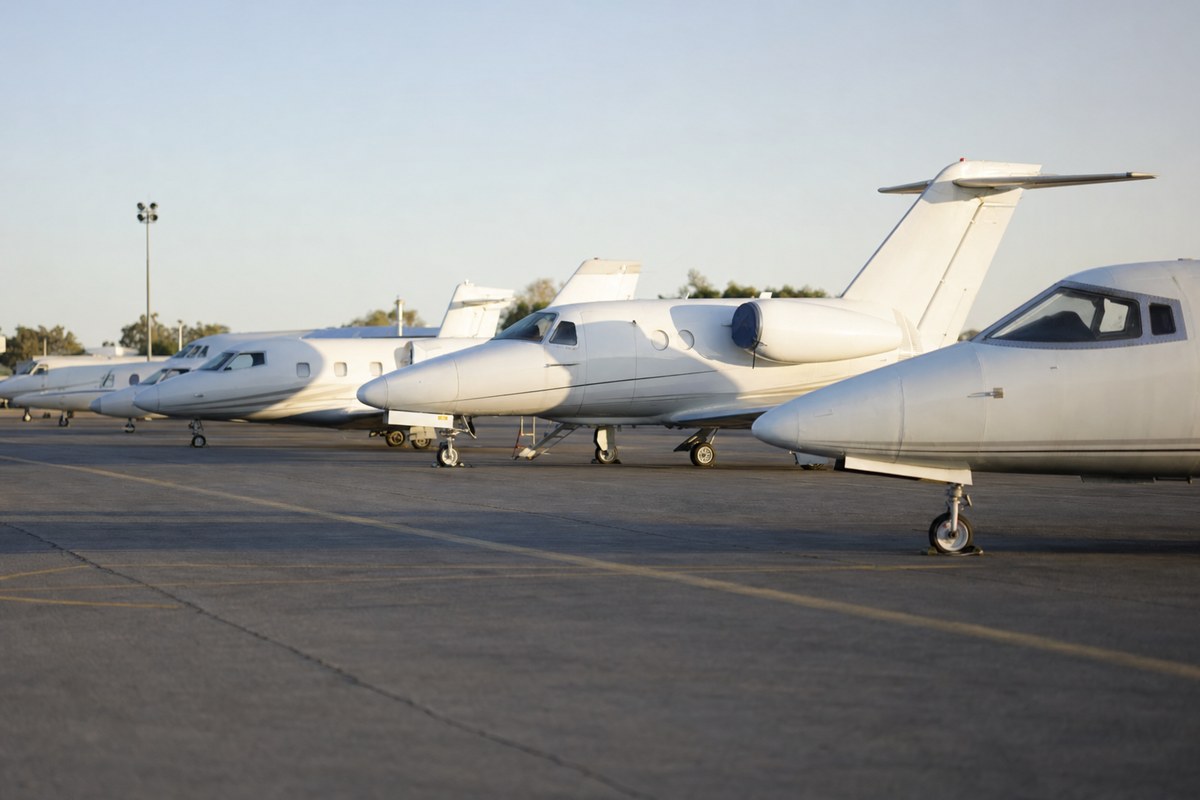
The Kenya Airports Authority has auctioned only about five aircraft since 2024, when the number of grounded planes at Wilson stood at around 70. A KAA spokesperson said the disposal process is ongoing, describing it as "a continuous process" where "more are added with time," and said the authority is "continuing to seek ways to dispose of the remaining ones." KAA is now planning to scrap aircraft that are no longer airworthy and whose owners cannot pay accumulated charges, with the spokesperson saying "even grounded planes pay for parking" and that only aircraft whose owners can no longer pay are disposed of as scrap metal.
In January 2024, KAA published a list of 92 abandoned aircraft across the country for auction, with Wilson accounting for 70, Jomo Kenyatta International Airport hosting 11, Lokichoggio Airport in Turkana County seven, and Malindi Airport in Kilifi four. Owners named included defunct carriers Fly540, Skylink, Capital Airline, Bush Air, DAC Aviation, Aerolink, Rudufu, Standard Aviation, Geo Air, Ace Air and Freedom Airlines, as well as flying schools 99 Flying School and Flight Training Centre, Moi University, the National Air Support Department, and private individuals. The congestion has forced some operational aircraft to divert to Orly Airpark in Olooloitikosh near Kiserian. Wilson handled 83,855 aircraft movements in the year to June 2025, up 28 percent from 65,512 in the year to June 2021. The audit also identified a corridor serving as the terminal that can accommodate only up to 50 passengers at a time, a partially non-functional security screening system, and limited car parking. KAA's profit nearly halved to Sh3.8 billion in the year to June 2025, after revenues fell by about Sh1.1 billion. Under published tariffs, aircraft weighing up to 10,000 kg are charged $6 per day for parking, while those over 300,000 kg pay $130 per day, applicable to aircraft parked for more than six continuous hours.
Industry impact & what to watch
Abandoned fleets sitting on an apron for years is a recurring hazard at airports where owners of defunct carriers or grounded flying-school aircraft face no fast legal route to repossession, and Wilson's case shows how slowly that inventory clears even once flagged. KAA disposed of only about five of the roughly 70 aircraft it identified at Wilson in 2024, while the total climbed to 90, meaning the disposal rate is running well behind the rate of new abandonment.
General aviation airports depend on apron turnover to generate parking revenue and keep space available for aircraft that are actually flying; when grounded, non-paying aircraft occupy that space indefinitely, the airport loses both the fee income and the capacity, and operators are pushed to divert elsewhere, as some already have to Orly Airpark near Kiserian. That dynamic compounds when movements are rising, as Wilson's have by 28 percent over the period cited.
What happens next depends on how quickly KAA moves from stating an intent to scrap non-airworthy, unpaid aircraft to actually executing it, and whether the legal process for declaring ownership forfeit can keep pace with new arrivals of grounded planes.
Who this affects
- General Aviation Airports — An apron holding 90 grounded aircraft is squeezing space for active traffic even as movements climb toward 83,855 a year.
- Business Charter Operators — Operators at Wilson may need to plan around parking congestion or divert to alternative fields such as Orly Airpark near Kiserian.
- Fixed Base Operators (FBO) — Ramp and parking operations at Wilson are constrained by aircraft that occupy space without generating fee revenue.
The underlying facts come from the originating publisher (linked above). The narrative, industry-impact assessment and per-role analysis below are produced independently by the AVI-GO intelligence team from public information. Cite as: AVI-GO, "90 Abandoned Aircraft Clog Wilson Airport Apron, Costing Kenya Airports Authority Revenue" news brief, 2026-08-24.
How to cite
AVI-GO, “90 Abandoned Aircraft Clog Wilson Airport Apron, Costing Kenya Airports Authority Revenue”. https://ai.avi-go.com/news/ai-news-center/news-briefs/90-abandoned-aircraft-clog-wilson-airport-apron-costing-kenya-airports-99fcf5a0c7a305c589258bbcc9581350
Figures carry an explicit measurement window — cite the window shown on this page, not the date you retrieved it.