VIVIFY Technology Launches Independent Validation Program for HOG™ Hydrogen Platform, Plans 2026 Data Publication
VIVIFY Technology has launched an independent validation program for its HOG hydrogen energy platform, testing a 65 kW turbine unit ahead of a planned 2026 data publication.
Original report
www.aol.com
Industry impact
Independent third-party measurement of energy output and safety, rather than vendor claims alone, is what lets a new power-generation technology move toward permitting and commercial deployment.
What happened
VIVIFY Technology announced an independent validation program for its HOG hydrogen energy platform on August 18, 2026, from Delray Beach, Florida, aimed at producing independently measured and publishable performance data ahead of a planned 2026 publication.
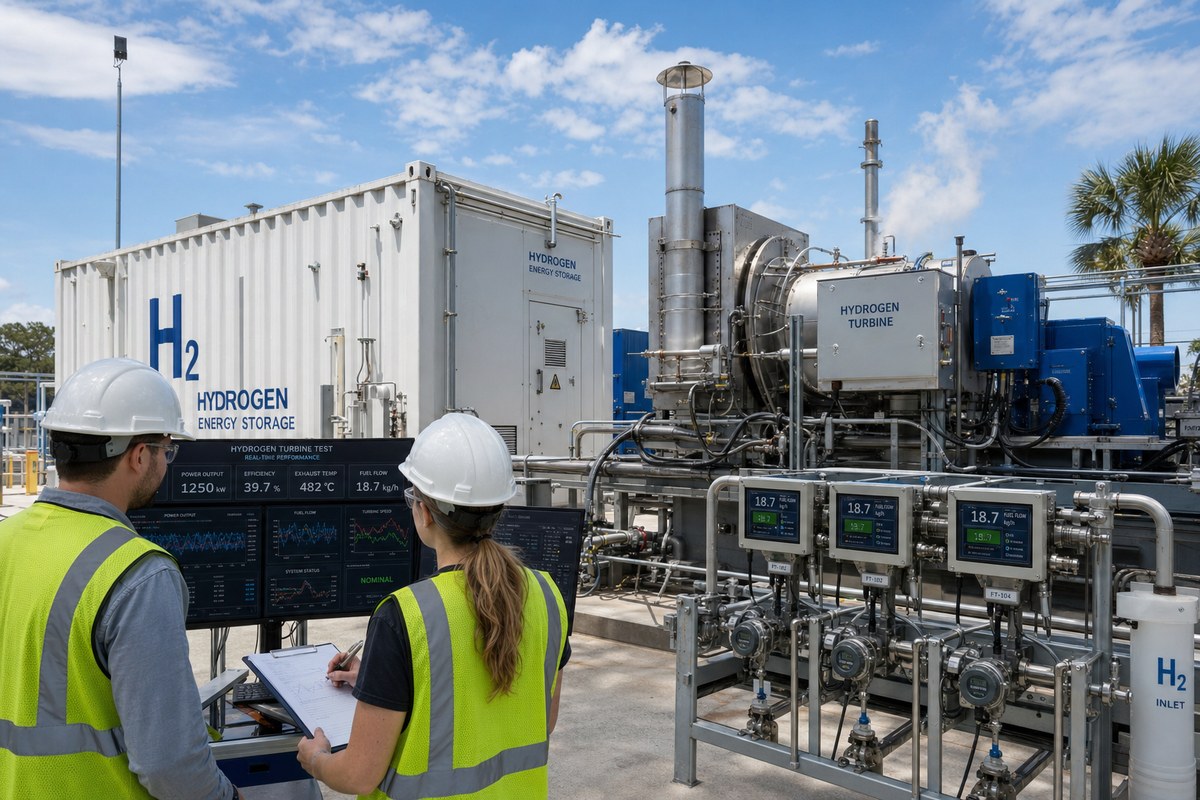
The program centers on HOG's 65 kW nominal turbine test unit, the technical basis for VIVIFY's containerized Flying Pig platform and future commercial-scale deployments. The validation framework will independently measure five areas: net energy balance and system efficiency, sustained electrical generation and power quality, hydrogen production and water use, emissions performance, and operational and hydrogen safety. The testing methodology includes revenue-grade electrical metering, calibrated flow and temperature instrumentation, hydrogen-flow verification, water mass accounting, continuous monitoring, thermal inspection, independent physics review, and witnessed testing with documented chain of custody. The framework requires a minimum 72-hour continuous operating test, with 30 days of continuous monitoring preferred, and references EPA, IEC, and ISO testing standards.
Jason Herring, Founder and CEO of VIVIFY Technology, said: "We are not asking anyone to take HOG on faith. We are putting the entire system under independent measurement, and we will publish the results." The initial validation focuses on the 65 kW turbine configuration underlying the Flying Pig platform, which is engineered toward a 1 MW rating through modular scale-up. VIVIFY said a completed validation program would establish an independently measured performance baseline for larger-scale deployment, permitting, interconnection, and commercialization.
Industry impact & what to watch
New power-generation technologies commonly face skepticism until an outside party, not the developer, confirms the numbers behind the claims. Publishing a validation protocol before results exist is one way a company tries to pre-empt that skepticism by fixing the measurement standard first.
How such a program actually lands depends on who performs the witnessed testing and physics review, not on the developer's own description of its instrumentation. A 72-hour minimum test with a 30-day preferred monitoring window is a modest data set for judging sustained output at 65 kW, let alone the 1 MW scale VIVIFY is aiming for through modular scale-up.
The next concrete marker is the 2026 publication itself, and specifically whether the released data covers the full 72-hour minimum or the longer 30-day monitoring period, and which independent party's name is attached to the physics review and chain of custody.
Who this affects
- Fuel Suppliers — Independently verified hydrogen production and safety figures from a 65 kW test unit offer an early data point for suppliers watching hydrogen-based generation claims.
The underlying facts come from the originating publisher (linked above). The narrative, industry-impact assessment and per-role analysis below are produced independently by the AVI-GO intelligence team from public information. Cite as: AVI-GO, "VIVIFY Technology Launches Independent Validation Program for HOG™ Hydrogen Platform, Plans 2026 Data Publication" news brief, 2026-08-25.
How to cite
AVI-GO, “VIVIFY Technology Launches Independent Validation Program for HOG™ Hydrogen Platform, Plans 2026 Data Publication”. https://ai.avi-go.com/news/ai-news-center/news-briefs/vivify-technology-launches-independent-validation-program-for-hogtm-hy-7ae7854cd7de013409ba5d3280814579
Figures carry an explicit measurement window — cite the window shown on this page, not the date you retrieved it.