Severe Storms Cause Flight Delays, Ground Stops, and Rail Disruptions Across U.S.
Severe thunderstorms triggered ground stops at Chicago O'Hare and Detroit Metro, flow controls near New York, Philadelphia and Washington, and a multi-day airline travel waiver from August 19 to 23.
Original report
www.thetraveler.org
Industry impact
Weather disruption on this scale shows how a single storm system cascades through congested hub airports and forces flow control across an entire regional corridor for days.
What happened
Severe late-summer storms disrupted air and rail travel across multiple U.S. regions, producing ground stops, lengthy flight delays, cancellations, and suspended or reduced train services. At Chicago O'Hare International Airport, thunderstorms prompted air-traffic managers to impose a ground stop before shifting to a ground delay program as conditions improved, with flight-tracking data showing congestion on taxiways and at gates as delayed arrivals competed for limited space once operations resumed.
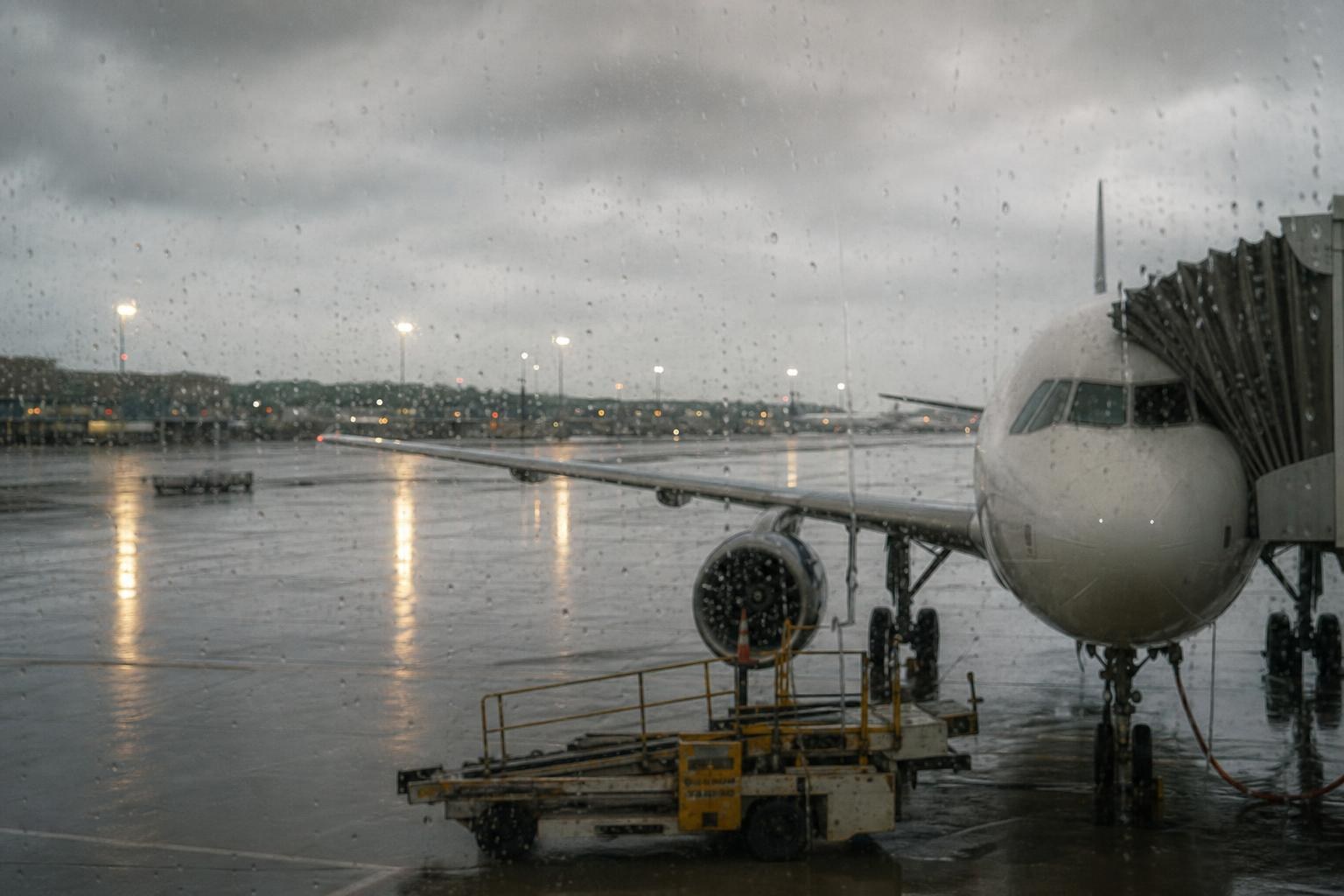
At Detroit Metropolitan Wayne County Airport, thunderstorms moving across southeast Michigan triggered a ground stop on August 22 that was lifted later that afternoon. The National Weather Service warned of additional storms accompanying a cold front, raising the likelihood of further rolling delays as airlines worked through earlier backlogs. Federal airspace advisories for the eastern United States showed weather-related flow controls on routes serving the New York, Philadelphia, and Washington corridors, with strategic rerouting and speed restrictions used to steer aircraft around the strongest storm activity.
One major U.S. carrier issued a multi-day travel waiver covering a broad set of airports from August 19 to 23, allowing passengers to rebook without change fees. Traveler reports described aircraft held at gates or on taxiways while storm cells passed, with some crews reaching maximum legal duty limits before takeoff, forcing flights to cancel and stranding passengers overnight. In central Florida, a signal outage on the SunRail commuter network caused by damage to a fiber optic line led to suspension of service between Winter Park and Poinciana, including stops serving the wider Orlando area, while in other regions heavy rain and strong winds prompted line-speed restrictions, diversions, and temporary closures where tracks were threatened by flooding, fallen trees, or debris, with some passengers directed to replacement bus services.
Industry impact & what to watch
This episode illustrates how a single storm system moving across several states can compound through a congested hub network: a ground stop at one airport builds a backlog that spreads delays for hours after the weather itself clears, while flow controls on approach corridors ripple into airports well outside the storm's path.
Commercial scheduling around major hubs like O'Hare and Detroit Metro depends on tight gate and taxiway turnaround; once a ground stop forces arrivals to queue, recovery takes longer than the disruption itself because crews can run into duty-time limits and aircraft end up out of position for their next scheduled departure. The same dynamic explains why a carrier issues a waiver spanning several days and multiple airports rather than a single date, since the backlog from one afternoon of storms can take that long to clear.
The cold front cited by the National Weather Service means further rolling delays remain possible in the near term, and whether the SunRail line and other affected rail corridors return to normal service will depend on repair of the damaged signal infrastructure and clearing of storm debris from the tracks.
Who this affects
- Business Charter Operators — Ground stops and flow controls around Chicago, Detroit, and the New York-Philadelphia-Washington corridor are pushing back charter departure and arrival times.
- Charter Brokers — Clients booked through the affected corridors should be warned of delay and cancellation risk from the ongoing ground stops and flow controls.
- Commercial Airports — O'Hare, Detroit Metro, and airports across the New York-Philadelphia-Washington corridor faced ground stops, flow controls, and gate congestion.
The underlying facts come from the originating publisher (linked above). The narrative, industry-impact assessment and per-role analysis below are produced independently by the AVI-GO intelligence team from public information. Cite as: AVI-GO, "Severe Storms Cause Flight Delays, Ground Stops, and Rail Disruptions Across U.S." news brief, 2026-08-24.
How to cite
AVI-GO, “Severe Storms Cause Flight Delays, Ground Stops, and Rail Disruptions Across U.S.”. https://ai.avi-go.com/news/ai-news-center/news-briefs/severe-storms-cause-flight-delays-ground-stops-and-rail-disruptions-ac-ef56450c97e92381b0b14b9a8e1899d1
Figures carry an explicit measurement window — cite the window shown on this page, not the date you retrieved it.