Over 3 Million Indonesians Exposed to Wildfire Haze as Health Ministry Urges Mask Use
Indonesia's Health Minister Budi Gunadi Sadikin said Sunday that roughly 3 million people across 37 districts in seven provinces have been exposed to wildfire haze, urging mask use and air-quality monitoring.
Original report
en.tempo.co
Industry impact
Widespread haze across multiple provinces signals a recurring visibility and air-quality hazard that can affect flight operations and ground handling in the affected region during fire season.
What happened
Indonesia's Health Minister Budi Gunadi Sadikin said on Sunday that approximately 3 million people have been exposed to smoke from wildfires, urging residents to wear masks and regularly check air quality to limit health risks. Speaking in Jakarta, he warned that fine PM2.5 particles in wildfire smoke can penetrate deep into the respiratory system and raise the risk of acute respiratory infections, particularly for children, pregnant people, the elderly, and those with asthma or other lung conditions.
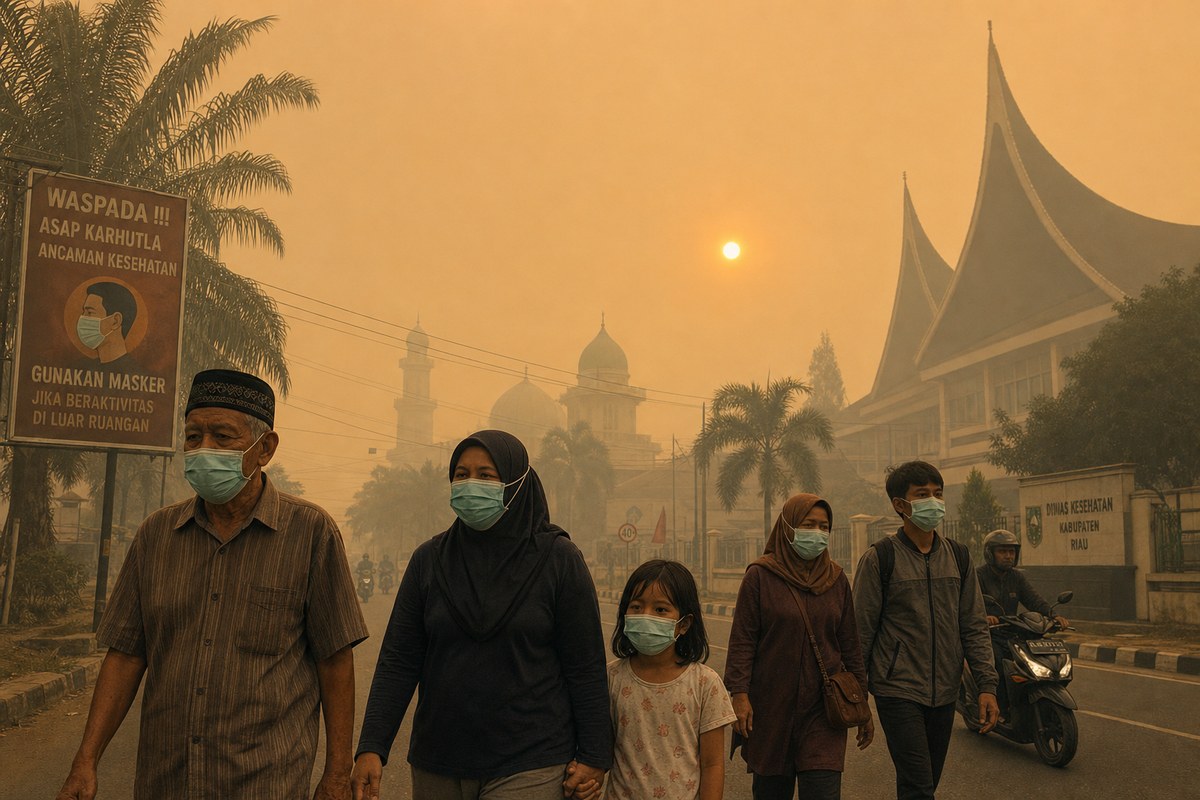
According to Health Ministry data as of Friday, August 21, wildfires had spread across 87 districts and municipalities in seven provinces: Jambi, Riau, South Sumatra, West Kalimantan, Central Kalimantan, South Kalimantan, and East Kalimantan. Around 3 million people in 37 of those districts and municipalities were directly exposed to haze. Sadikin said PM2.5 particles, which measure less than 2.5 micrometers in diameter, can trigger health problems ranging from eye irritation and an itchy throat to shortness of breath, and can worsen chronic lung diseases.
The government is encouraging residents to consult official air quality index applications before outdoor activities. The Health Ministry also urged the public not to dismiss mild respiratory symptoms, advising anyone with shortness of breath, persistent coughing, chest pain, or severe eye irritation to seek medical attention at the nearest health center or hospital.
Industry impact & what to watch
Seasonal haze events in Sumatra and Kalimantan have historically coincided with reduced visibility and air quality warnings that ripple beyond public health into aviation operations, since smoke plumes over these provinces can affect approach visibility and ramp conditions at airports serving the affected districts. When haze density rises, airports in the region typically see disruptions tied to visibility minimums rather than to formal closures announced in advance.
For operators flying into or through Jambi, Riau, South Sumatra, or the Kalimantan provinces, haze of this scale is a recurring seasonal operating condition rather than an isolated event, and dispatch decisions during these weeks depend on real-time visibility and air quality readings rather than pre-planned schedules.
What happens next will depend on whether the haze intensifies or spreads to additional districts, and whether authorities issue any airport-specific visibility advisories as the fire season continues across the seven named provinces.
Who this affects
- Business Charter Operators — Flights into the seven haze-affected Indonesian provinces may face visibility-driven dispatch complications until conditions improve.
- General Aviation Airports — Airfields in the affected Sumatra and Kalimantan provinces may see haze-related visibility conditions affecting ramp and flight operations.
The underlying facts come from the originating publisher (linked above). The narrative, industry-impact assessment and per-role analysis below are produced independently by the AVI-GO intelligence team from public information. Cite as: AVI-GO, "Over 3 Million Indonesians Exposed to Wildfire Haze as Health Ministry Urges Mask Use" news brief, 2026-08-25.
How to cite
AVI-GO, “Over 3 Million Indonesians Exposed to Wildfire Haze as Health Ministry Urges Mask Use”. https://ai.avi-go.com/news/ai-news-center/news-briefs/over-3-million-indonesians-exposed-to-wildfire-haze-as-health-ministry-70989b0bb09a43168c824e82f09fb2e8
Figures carry an explicit measurement window — cite the window shown on this page, not the date you retrieved it.