Oslo Airport Reopens After Five-Hour Strike Closure; 139 Movements Canceled, Talks Set for Monday
Oslo Airport reopened at approximately 11:30 on Sunday, August 23 after a five-hour air traffic controller strike closure, with 139 movements canceled, and union-employer talks are set for Monday.
Original report
www.airwaysmag.com
Industry impact
A narrow labor dispute over controller working conditions can idle a national air traffic system in stages, showing how thin the margin is between localized strike action and cascading network-wide disruption.
What happened
Oslo Airport reopened to scheduled traffic at approximately 11:30 local time on Sunday, August 23, 2026, after a five-hour closure caused by Norway's ongoing air traffic controller strike. The airport had halted scheduled movements at 06:30. Avinor Flysikring Director Jan-Gunnar Pedersen said the restart would be controlled and capacity would return gradually. Avinor's live data recorded the first departure after the closure at 11:36 and the first arrival at 11:43.
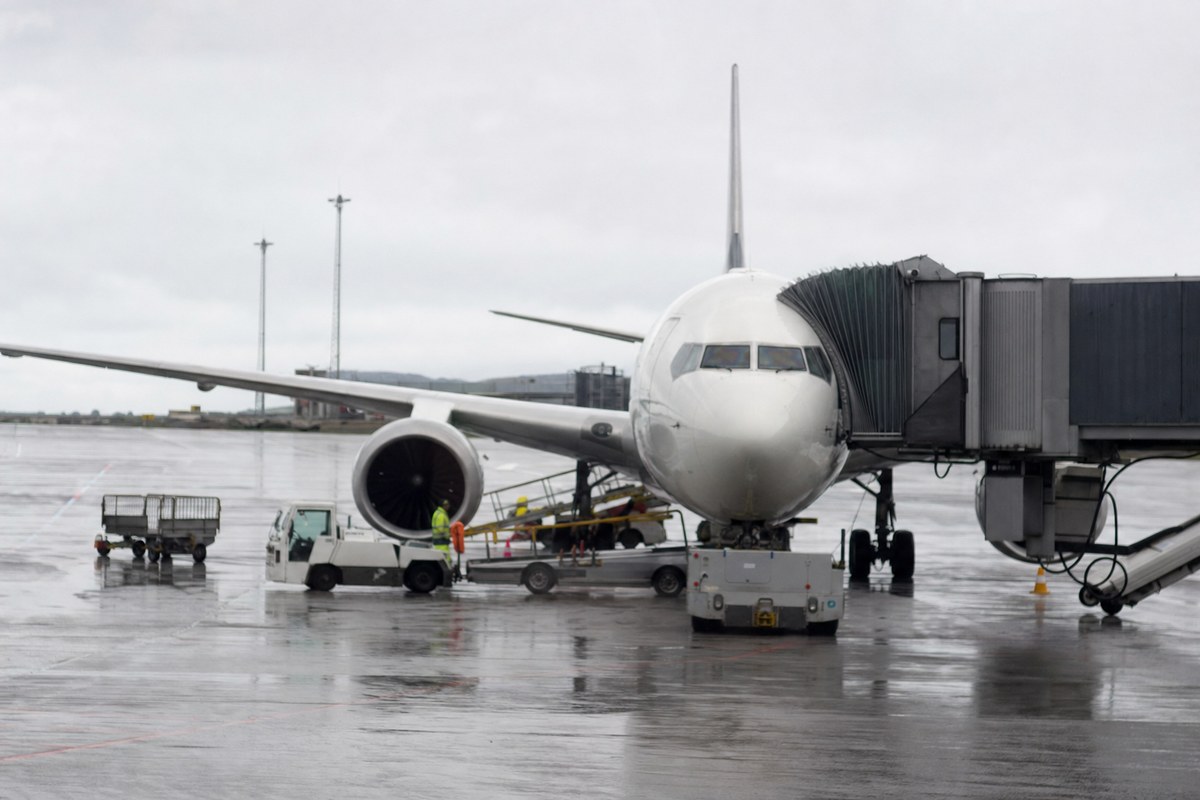
As of 19:28 CEST, a count of Avinor's official Oslo timetable found 139 scheduled movements marked canceled: 75 departures and 64 arrivals. [Norwegian](/entities/b5d69c8d1a7b5c08b3b79ee128ecb4ba) accounted for 64 of the canceled movements, [SAS Scandinavian Airlines](/entities/2b5ac463a68351c5ad5df67366493aca) for 47, and [Widerøe](/entities/6466202436d7557aa8e62756e8189fe4) for six. Norwegian told NRK that Sunday's closure affected approximately 9,000 of its passengers. Forty-eight of the cancellations had scheduled times at or after the 11:30 reopening. Avinor had projected 95,521 passengers through Oslo Airport on August 23.
The strike also disrupted western Norway. Airspace serving Bergen Airport, Flesland, and Stavanger Airport, Sola, closed to scheduled traffic from 18:45 to 22:20 on Saturday. More than 300 passengers spent the night at Bergen Airport, where Avinor placed camp beds in the terminal and opened seating areas beyond security. The initial strike action involved 12 controllers from units serving Gardermoen, its approach control, Bergen/Flesland, and the western Norway area control center; search and rescue, ambulance, police, and operational military flights receive priority, followed by scheduled airline and offshore helicopter traffic.
How it unfolded
Industry impact & what to watch
A dispute confined to a dozen controllers was enough to close one of Norway's busiest airports for five hours on a day Avinor had projected close to 95,521 passengers, and to strand overnight travelers in Bergen the night before. That gap between the size of the labor action and the scale of the disruption is the pattern worth noting: air traffic control is a single point of failure for an entire national network, so a localized staffing dispute can cascade into hundreds of canceled movements and tens of thousands of affected passengers within hours.
Priority-based flying during a controller shortage also shows how the segment reallocates scarce capacity under stress: search and rescue, ambulance, police, and military flights keep moving first, then scheduled airlines and offshore helicopters, while everything else waits. That ordering matters for any operator trying to get a flight through disrupted airspace, since priority is not for sale and is not first-come, first-served.
Monday's 08:00 talks between Norsk Flygelederforening and Spekter are the next fixed point, and Tuesday's planned escalation by eight more controllers into Tromsø and northern Norway airspace signals the dispute has room to widen rather than resolve. Whether Monday's session ends the strike or hardens it will determine whether Tuesday's expansion happens at all.
Who this affects
- Business Charter Operators — Flights into Oslo, Bergen, Stavanger, or Tromsø face closures and priority sequencing behind emergency and military traffic.
- Charter Brokers — Clients booked through Oslo, Bergen, Stavanger, or Tromsø face rising cancellation and delay risk as the strike escalates.
- Commercial Airports — Oslo and Bergen airports face residual delays and continued strain on passenger facilities after weekend closures.
- Air Traffic Management (ATM) Authorities — Air navigation authorities face a widening strike with talks set for Monday and further escalation planned for Tuesday.
The underlying facts come from the originating publisher (linked above). The narrative, industry-impact assessment and per-role analysis below are produced independently by the AVI-GO intelligence team from public information. Cite as: AVI-GO, "Oslo Airport Reopens After Five-Hour Strike Closure; 139 Movements Canceled, Talks Set for Monday" news brief, 2026-08-24.
How to cite
AVI-GO, “Oslo Airport Reopens After Five-Hour Strike Closure; 139 Movements Canceled, Talks Set for Monday”. https://ai.avi-go.com/news/ai-news-center/news-briefs/oslo-airport-reopens-after-five-hour-strike-closure-139-movements-canc-895a3a2173372d3804bc97a634e3cefe
Figures carry an explicit measurement window — cite the window shown on this page, not the date you retrieved it.