Older Pre-Owned Business Jets Offer 39–45% Net Cost Savings Over Factory-New Models, Analysis Shows
A strategic analysis by consultant René Armas Maes finds older pre-owned Super Mid-Size Jets can deliver 39–45% net cost savings versus factory-new aircraft over a five-year holding period.
Original report
www.avbuyer.com
Industry impact
Tight pre-owned supply and 20–24 month factory lead times are pushing buyers toward older airframes, reshaping demand and financing patterns across the pre-owned Super Mid-Size Jet segment.
A strategic analysis by business aviation consultant René Armas Maes, published in August 2026, finds that buyers of older pre-owned business jets can achieve net cost savings of roughly 39–45% compared with purchasing a factory-new aircraft over a five-year holding period, assuming 350 flight hours of annual utilization. The analysis points to tight supply and long factory lead times: as of June 2026, AMSTAT reported pre-owned Super Mid-Size Jet listings well below 5% of the global fleet, against a 10% threshold historically considered a balanced market, while new-aircraft delivery lead times have settled at 20 to 24 months.
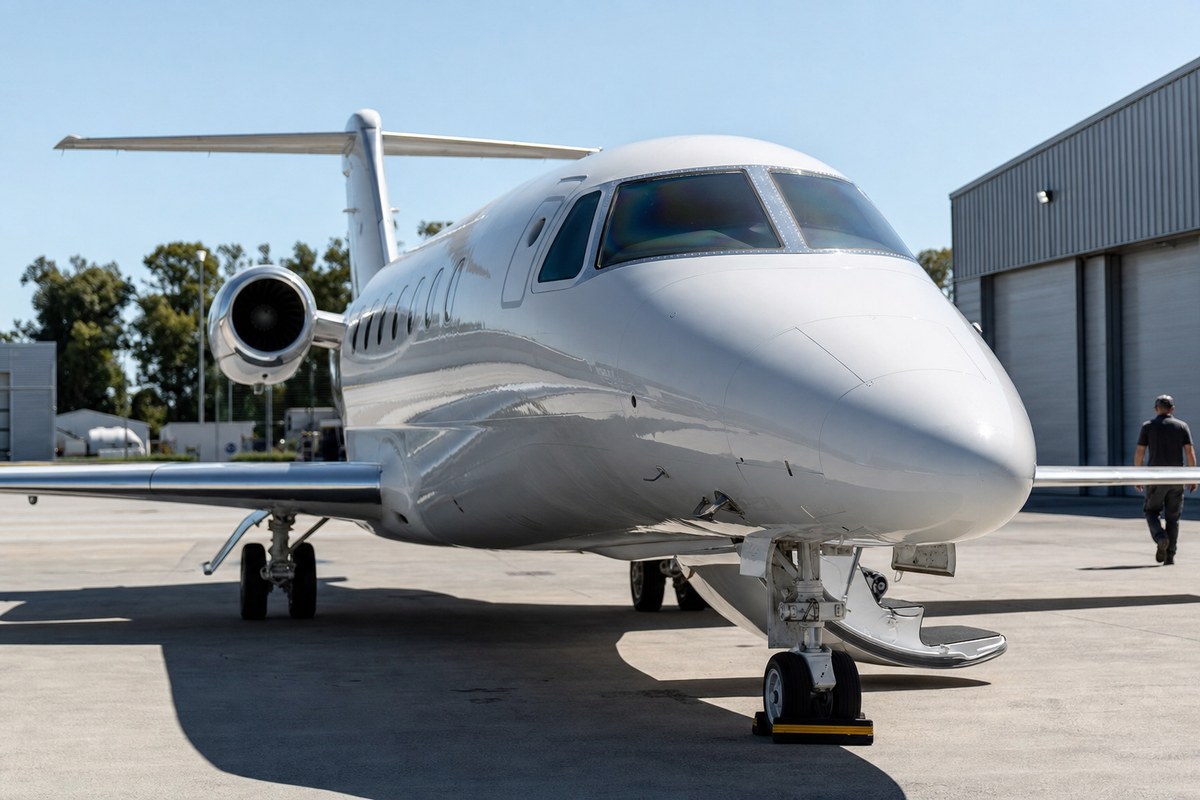
The business case compares four scenarios built around two Super Mid-Size Jet platforms. Aircraft 1, produced between 2001 and 2016 with about 460 units sold, costs around $27 million new versus approximately $8 million for a 2006 'Legacy' airframe. Aircraft 2 spans a 'Deep Legacy' variant produced from 2000 to 2011, with a 2005 example around $4 million, and a 'Late Model' variant introduced in 2012, with a 2014 example available for a comparable price bracket. Savings are concentrated in acquisition price, where older variants cost $13 million to $23 million less, and in the cost of waiting, since a factory-new buyer must source charter lift for about two years at $9,000 per hour, generating a charter burden of more than $6 million, while a pre-owned jet can be deployed within roughly two months.
Older aircraft also carry penalties: steeper depreciation and wider resale discounts, with the Aircraft 2 'Deep Legacy' model recovering little net equity at exit, and tighter financing, including down payments rising to 35% of aircraft value and lender ceilings limiting aircraft age plus amortization term to 20–25 years, with many lenders declining aircraft older than 15–20 years. The analysis concludes the Aircraft 1 'Legacy' model best optimizes the trade-off, while the Aircraft 2 'Deep Legacy' model represents the limit of the strategy, and that the case for older pre-owned jets weakens for buyers with low annual utilization, a need for the latest cabin connectivity, or high financial leverage.
The underlying facts come from the originating publisher (linked above). The narrative, industry-impact assessment and per-role analysis below are produced independently by the AVI-GO intelligence team from public information. Cite as: AVI-GO, "Older Pre-Owned Business Jets Offer 39–45% Net Cost Savings Over Factory-New Models, Analysis Shows" news brief, 2026-08-24.
How to cite
AVI-GO, “Older Pre-Owned Business Jets Offer 39–45% Net Cost Savings Over Factory-New Models, Analysis Shows”. https://ai.avi-go.com/news/ai-news-center/news-briefs/older-pre-owned-business-jets-offer-3945-net-cost-savings-over-factory-ca6ad9e06b4a53284cc3a49d0704be10
Figures carry an explicit measurement window — cite the window shown on this page, not the date you retrieved it.