Multiple Tire Failures on American and United Jets at Chicago O'Hare Prompt FAA Investigation and Runway Safety Review
The FAA is investigating at least three tire-failure incidents on American Airlines and United Airlines jets at Chicago O'Hare within several days, prompting a runway and maintenance safety review.
Original report
www.thetraveler.org
Industry impact
A short cluster of tire failures at a single high-traffic hub shows how quickly routine mechanical events can trigger regulatory scrutiny of runway and maintenance conditions.
What happened
A cluster of tire failures on commercial aircraft at Chicago O'Hare International Airport has drawn an FAA investigation and closer scrutiny of runway conditions and aircraft maintenance. At least three high-profile incidents occurred within the span of several days, involving [American Airlines](/entities/2c7ad8a1335f52e1a02825d740e1afa5) and [United Airlines](/entities/396eb751cec95bedb6b03c0a15265a3c) aircraft.
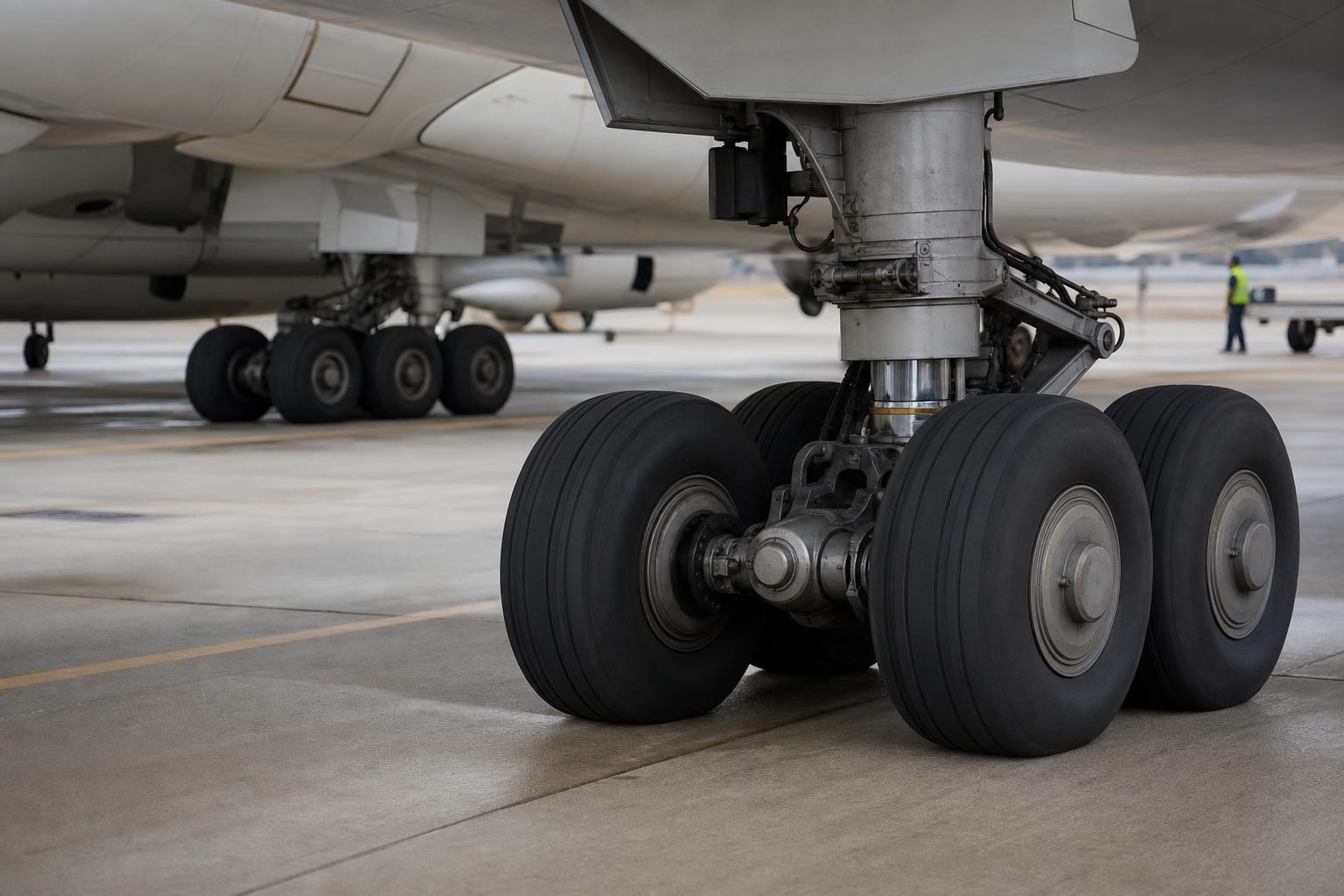
An American Airlines Boeing 737 suffered two blown tires on touchdown at O'Hare; the aircraft remained on the runway, passengers were bused to the terminal, and the jet was towed away for inspection, with no injuries reported. Later the same day, a United Airlines flight arriving from Omaha experienced a tire failure while exiting the runway, the second landing-gear tire problem at the airport that day. Days earlier, a separate United Airlines jet aborted its takeoff when multiple tires blew at high speed during the departure roll, scattering rubber fragments along the pavement and forcing passengers to deplane on the runway. Pilots of nearby aircraft reported seeing chunks of tire scattering behind the United jet as it rolled to a stop.
The FAA confirmed it is investigating the cluster, focusing on the three closely spaced events. Investigators are reviewing maintenance records, runway inspection logs and air traffic control data. Each incident prompted standard emergency responses, including foreign object debris inspections to locate and remove rubber fragments, wheel parts or metal, and caused temporary runway closures and routing changes with delays measured in minutes. Local news outlets also documented an earlier incident in which an American Airlines flight arrived from Miami with flat main-gear tires, requiring a prolonged runway-side response.
How it unfolded
Industry impact & what to watch
Clustered mechanical failures at a single busy airport routinely draw this kind of scrutiny even when each event individually falls within the range of rare but expected occurrences. Investigators are examining whether runway surface conditions, high temperatures, braking loads or maintenance deficiencies played a role, and are weighing whether the O'Hare cluster reflects a shared cause or simply a statistical grouping at a high-volume hub.
Runway safety at major hubs depends on rapid debris clearance and inspection cycles precisely because a single failure can leave rubber, wheel parts or metal fragments hazardous to the next aircraft using that surface. The FAA's review of maintenance and inspection logs across two carriers, rather than a single operator, indicates the agency is treating this as a possible airport-level or environmental factor rather than an isolated fleet issue.
The next milestone is whatever the FAA's review of maintenance records and runway logs turns up, and whether it points to a shared mechanical cause, a runway surface issue, or confirms the events as an unrelated cluster.
Who this affects
- Commercial Airports — Runway inspection and debris-clearance protocols at the affected hub face regulatory review after repeated tire failures.
- Line Maintenance Services — Airfield debris-clearance and aircraft-towing response demand rises at the hub while maintenance records tied to the tire failures are reviewed.
- Commercial Airlines — Two carriers face FAA scrutiny of maintenance records tied to grounded aircraft after tire failures at the same airport.
The underlying facts come from the originating publisher (linked above). The narrative, industry-impact assessment and per-role analysis below are produced independently by the AVI-GO intelligence team from public information. Cite as: AVI-GO, "Multiple Tire Failures on American and United Jets at Chicago O'Hare Prompt FAA Investigation and Runway Safety Review" news brief, 2026-08-24.
How to cite
AVI-GO, “Multiple Tire Failures on American and United Jets at Chicago O'Hare Prompt FAA Investigation and Runway Safety Review”. https://ai.avi-go.com/news/ai-news-center/news-briefs/multiple-tire-failures-on-american-and-united-jets-at-chicago-o-hare-p-c7ecc70526eb2bac57128dc75b809cd6
Figures carry an explicit measurement window — cite the window shown on this page, not the date you retrieved it.