FAA Issues Ground Stop at Denver International Airport After Severe Thunderstorms, Microbursts Cause Mass Delays and Diversions
The FAA issued a ground stop at Denver International Airport at 4:15 p.m. Mountain Time on August 21 after thunderstorms with gusts near 50 knots brought windshear and microbursts.
Original report
www.thetravel.com
Industry impact
Weather-driven ground stops ripple unevenly across carriers based on hub concentration and fleet size, turning a single airport's storm into a multi-state diversion and delay event.
What happened
The Federal Aviation Administration issued a ground stop at Denver International Airport on August 21 after severe thunderstorms with wind gusts nearing 50 knots forced dozens of flights into holding patterns and grounded departing aircraft for several hours. The storms struck in the late afternoon following a daytime high of 100 degrees Fahrenheit. The FAA issued its first ground stop order at 4:15 p.m. Mountain Time, initially set to last 90 minutes, but extended it until 8:30 p.m. when conditions failed to improve. Officials cited windshear and microbursts — intense, localized downbursts of wind and precipitation within a thunderstorm — as the primary danger to aircraft.
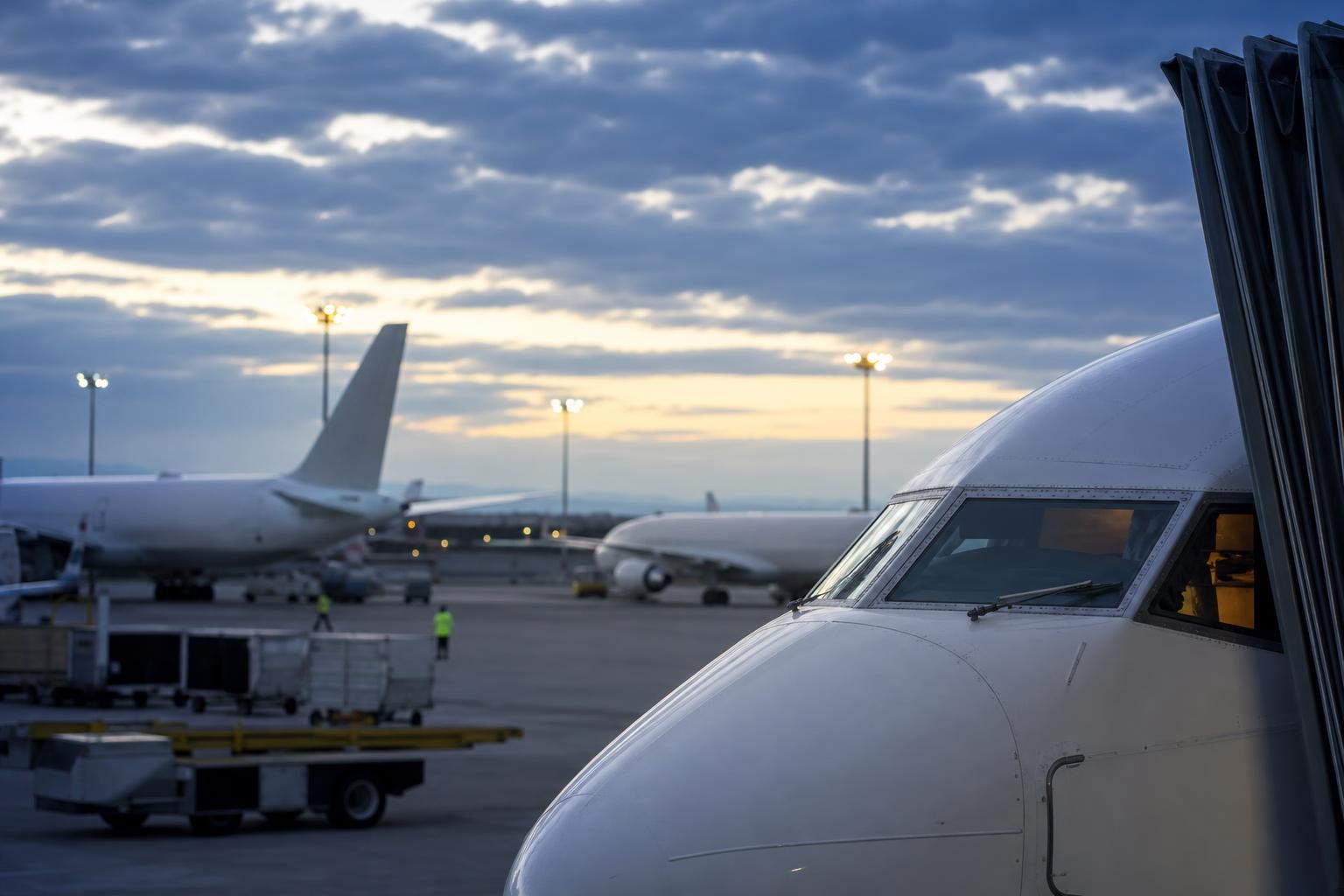
Hundreds of flights were delayed or canceled across multiple airlines. United Airlines recorded the highest number of disruptions, with 261 delays and 23 cancellations, and 68 diversions. [Southwest Airlines](/entities/8a75535db0815165a892b47c8092df82) reported 195 delays and 13 cancellations, including 33 diversions. [SkyWest Airlines](/entities/b707272889f55623851b6a8094d2d86a) had 147 delays and 12 cancellations. [Frontier Airlines](/entities/4fb6f79ae9bd5ebe969134bc1fcfac9c) logged 44 delays, [American Airlines](/entities/2c7ad8a1335f52e1a02825d740e1afa5) 27, Delta Air Lines 24, Alaska Airlines 8, Key Lime Air 7, JetBlue Airways 4 delays and 1 cancellation, and Air Canada 3 delays. Diverted flights were routed to airports including Colorado Springs, Colorado; Wichita, Kansas; Oklahoma City, Oklahoma; Casper, Wyoming; and Scottsbluff, Nebraska, among others.
A microburst is a column of rapidly descending cold air within a thunderstorm that produces sudden, intense wind and rain over a small area, typically lasting five to 15 minutes. In 1985, Delta Flight 191 crashed on approach to Dallas/Fort Worth International Airport after encountering a microburst, killing 136 of 163 passengers and the driver of a vehicle struck by the aircraft. Similar atmospheric conditions that produced the storm are forecast to return on Sunday, though the FAA had not issued any weather advisories for Denver as of the time of reporting.
How it unfolded
Industry impact & what to watch
A single airport's ground stop shows how quickly a weather event at one hub cascades into holding patterns, cancellations and diversions spread across several states, with the scale of disruption tracking each carrier's schedule density at that airport rather than the storm's severity alone. United's count of 261 delays, 23 cancellations and 68 diversions against Southwest's 195 delays and 33 diversions illustrates how the same four-hour stoppage lands unevenly depending on how concentrated an airline's operation is at the affected field.
Ground stops of this kind work by holding departures at origin airports nationwide while airborne aircraft already bound for the affected field either hold or divert, which is why cities as distant as Casper, Wyoming and Wichita, Kansas absorbed diverted traffic rather than aircraft simply waiting it out over Denver. The recovery afterward typically takes longer than the stop itself, since aircraft and crews scattered across diversion airports must be repositioned before the schedule can normalize.
Whether Sunday's forecast repeat of the same atmospheric pattern produces another ground stop will depend on whether the FAA issues a weather advisory in advance, something it had not done as of the time of reporting despite conditions closely resembling those that triggered Friday's stoppage.
Who this affects
- Business Charter Operators — Flights scheduled into or out of Denver around the storm window face holding-pattern delays or diversion to alternate airports.
- Charter Brokers — Clients booked through Denver around the storm period risk being diverted to a distant alternate airport instead of landing as planned.
- Commercial Airports — Denver International Airport must recover aircraft and crews scattered across several diversion airports before its schedule can normalize.
The underlying facts come from the originating publisher (linked above). The narrative, industry-impact assessment and per-role analysis below are produced independently by the AVI-GO intelligence team from public information. Cite as: AVI-GO, "FAA Issues Ground Stop at Denver International Airport After Severe Thunderstorms, Microbursts Cause Mass Delays and Diversions" news brief, 2026-08-24.
How to cite
AVI-GO, “FAA Issues Ground Stop at Denver International Airport After Severe Thunderstorms, Microbursts Cause Mass Delays and Diversions”. https://ai.avi-go.com/news/ai-news-center/news-briefs/faa-issues-ground-stop-at-denver-international-airport-after-severe-th-38dd7f3f5f97d5621ae16c50c893073c
Figures carry an explicit measurement window — cite the window shown on this page, not the date you retrieved it.