Damaged rotor blade may have caused Greek helicopter crash that killed British newlyweds
A Bell 206 helicopter crashed on landing at Sifnos on Monday, killing British newlyweds Alexander Cromie, 31, and Marie Ebert, 30, and the Greek pilot.
Original report
www.dailymail.com
Industry impact
The case shows how a maintenance step tied to a prior ground incident can escape full verification before an airworthiness certificate is issued and a return to service.
What happened
A Bell 206 helicopter crashed while coming in to land on the Greek island of Sifnos on Monday, killing British passengers Alexander Cromie, 31, and Marie Ebert, 30, along with the Greek pilot. Witnesses saw the helicopter spinning out of control before it went down, suggesting a tail rotor failure, and footage showed the aircraft immediately engulfed in a fireball with smoke rising from the wreckage.
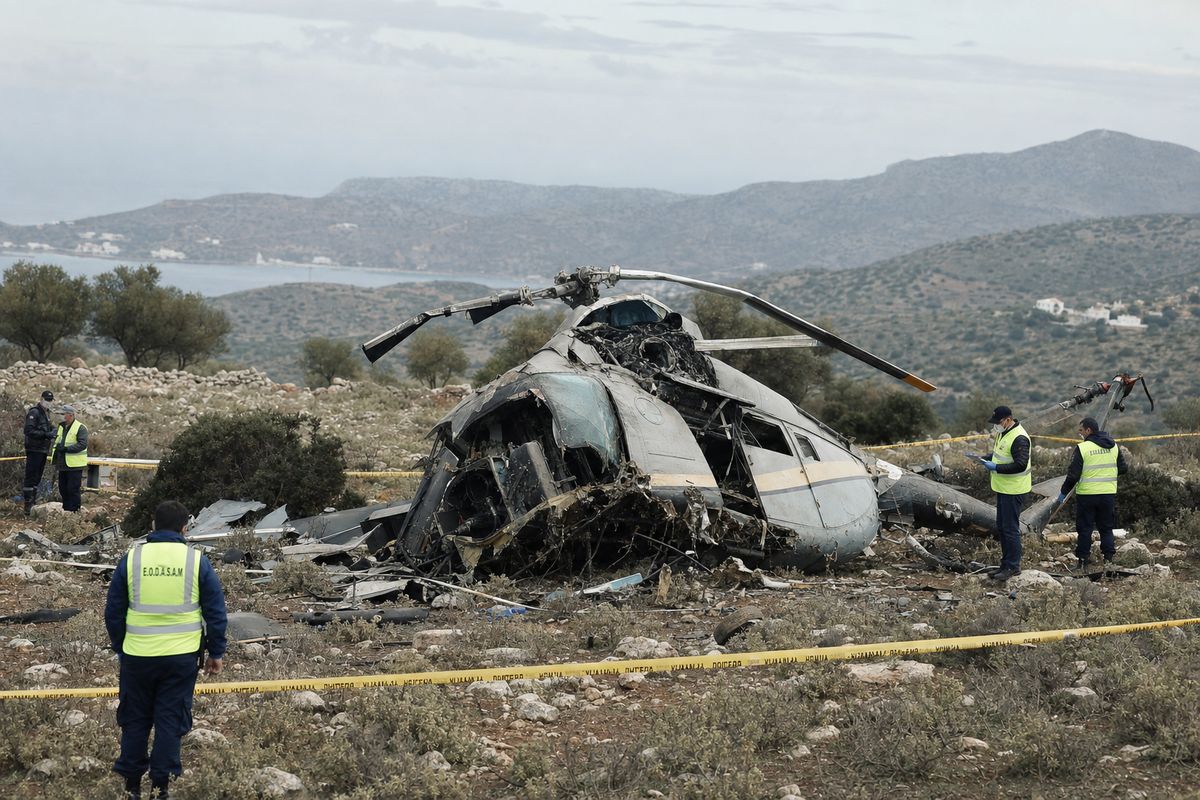
Investigators are examining whether the crash was linked to an incident 11 weeks earlier. On June 1, after the helicopter landed on the island of Paros, restraining straps were placed on the tail blades to stop them moving in high winds. A report filed with Greece's Civil Aviation Authority states the pilot failed to ensure the straps had been removed before restarting the engine to fly passengers off the island. Experts are assessing whether the straps caused strain or damage to the tail assembly.
Flight tracker records show the helicopter stayed in Paros for three weeks after the June 1 incident and then received an airworthiness certificate on July 2. Following the crash, Greece's civil aviation authority has ordered visual and functional checks on the tail rotors of all Bell 206 helicopters before every flight in the country. Mr Cromie and Ms Ebert had booked an 80-mile flight to Sifnos costing £1,300 as a honeymoon trip. Mr Cromie worked as a vice-president in private wealth solutions at Blackstone, which said he was "beloved by everyone who worked with him." Ms Ebert was a senior specialist at Bain & Company, whose London team called her "much-loved and deeply respected." Relatives of the couple flew to Athens to formally identify their bodies.
How it unfolded
Industry impact & what to watch
This case sits in a familiar category for rotorcraft safety: a routine ground precaution — securing tail blades against wind while an aircraft sits idle on a remote island — becomes a suspected root cause only after a later, unrelated-looking failure. Investigators now have to work backward from a fireball to a set of straps applied eleven weeks earlier.
Airworthiness certification for helicopters like the Bell 206 relies on inspection and sign-off at discrete points rather than continuous monitoring of every component's stress history. A tail assembly strained by restraints and then returned to service after three weeks on the ground can pass a certificate on July 2 without that certificate capturing cumulative mechanical strain from the earlier event. Greece's decision to mandate visual and functional tail-rotor checks before every flight for all Bell 206s in the country is the direct regulatory response to that gap.
What happens next depends on whether investigators can establish a causal link between the June 1 straps and the tail rotor failure witnesses described. If confirmed, the finding would likely prompt scrutiny of how post-incident maintenance sign-offs are verified before an aircraft returns to passenger service, both in Greece and among other operators of the same type.
Who this affects
- Business Charter Operators — Bell 206 operators in Greece must add mandatory pre-flight tail-rotor checks under the new directive.
- Charter Brokers — Brokers booking Bell 206 charters in Greece should confirm the new tail-rotor inspection is being carried out before travel.
- Standards & Certification Bodies — Standards bodies may need to revisit how post-incident maintenance sign-offs capture cumulative strain on tail assemblies.
The underlying facts come from the originating publisher (linked above). The narrative, industry-impact assessment and per-role analysis below are produced independently by the AVI-GO intelligence team from public information. Cite as: AVI-GO, "Damaged rotor blade may have caused Greek helicopter crash that killed British newlyweds" news brief, 2026-08-23.
How to cite
AVI-GO, “Damaged rotor blade may have caused Greek helicopter crash that killed British newlyweds”. https://ai.avi-go.com/news/ai-news-center/news-briefs/damaged-rotor-blade-may-have-caused-greek-helicopter-crash-that-killed-23bd2ec6ccf2155b5c1302d4e9d48047
Figures carry an explicit measurement window — cite the window shown on this page, not the date you retrieved it.