Baltic cyclone kills two, knocks out power for 500,000 in Latvia and Lithuania
A powerful cyclone crossed Latvia and Lithuania from Saturday into Sunday, killing at least two people and cutting power to roughly half a million residents across the Baltics and Poland.
Original report
www.indiatoday.in
Industry impact
Weather events that knock out regional power and transport for hundreds of thousands also disrupt airport operations and airspace access well beyond the storm's immediate track.
What happened
A powerful cyclone swept through Latvia and Lithuania from Saturday into Sunday morning, killing at least two people and leaving approximately half a million residents without electricity. The storm also disrupted transport and communications and affected parts of Estonia and north-eastern Poland.
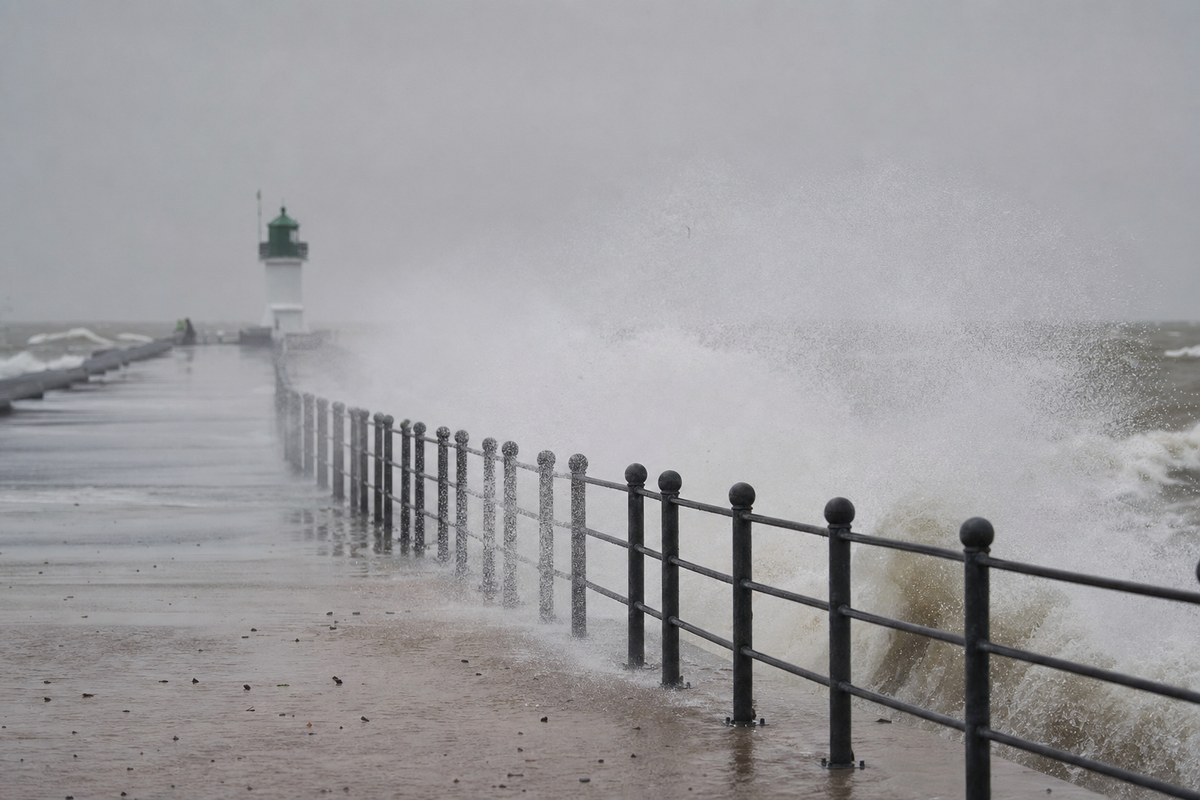
In Latvia, one person died in Jelgava after part of a building collapsed on Saturday, and others were injured across the country. Wind speeds in Riga exceeded 67 mph, and many weather stations recorded half of the average monthly rainfall in a single day. More than 250,000 people lost electricity and mobile services were disrupted. Rail and other public transport were hit after trees and debris fell on infrastructure. Riga airport warned on Sunday morning that flights could be delayed or rerouted due to the overnight storm.
In Lithuania, one person was killed after being struck by a falling tree, and more than 200,000 residents remained without power on Sunday morning. In Estonia, western and northern regions and the islands were worst affected, with ferry services to the islands suspended and trains arriving from Latvia and Lithuania delayed. In Poland, more than 100,000 people lost power. Latvian officials said the situation was expected to improve on Sunday and certainly by Monday. Andris Viksna of the Latvian Environment, Geology and Meteorology Centre described it as "the most severe storm in Latvia since 2005 in terms of its overall impact," and said that while the role of climate change could not yet be properly assessed, "it is plausible that human-caused climate change may have intensified the rainfall associated with the cyclone."
How it unfolded
Industry impact & what to watch
Severe regional storms of this scale routinely combine grid failure with disruption to rail, ferry and air transport, since fallen trees, debris and high winds hit power lines and airport operations at the same time. Riga airport's own warning of delays and rerouting shows how a cyclone with sustained winds above 67 mph forces schedule changes even where runways themselves stay open.
In business aviation, an event like this typically shows up first as ground handling and dispatch friction at the airports directly in the storm's path, then as knock-on rerouting for aircraft that would normally transit the region. The scale of disruption depends on how quickly power and communications are restored, which officials in Latvia expect to happen through Sunday and into Monday.
The next marker is whether Riga, and any affected fields in Lithuania, Estonia or Poland, return to normal operations on the timeline Latvian officials gave, or whether outages and infrastructure damage extend disruption into the new week.
Who this affects
- General Aviation Airports — Storm damage and power loss threaten ground operations at general aviation airfields across the affected Baltic states and Poland.
- Commercial Airports — Riga airport has warned flights may be delayed or rerouted following the overnight cyclone.
- Business Charter Operators — Flights routed through Riga or nearby affected airports face possible delay or rerouting until infrastructure recovers.
The underlying facts come from the originating publisher (linked above). The narrative, industry-impact assessment and per-role analysis below are produced independently by the AVI-GO intelligence team from public information. Cite as: AVI-GO, "Baltic cyclone kills two, knocks out power for 500,000 in Latvia and Lithuania" news brief, 2026-08-24.
How to cite
AVI-GO, “Baltic cyclone kills two, knocks out power for 500,000 in Latvia and Lithuania”. https://ai.avi-go.com/news/ai-news-center/news-briefs/baltic-cyclone-kills-two-knocks-out-power-for-500-000-in-latvia-and-li-5bd0aac8953daa608e2529930d69e31d
Figures carry an explicit measurement window — cite the window shown on this page, not the date you retrieved it.