At least five dead in Japan after 'unprecedented' rains flood Chiba, strand nearly 7,000 at Narita airport
Unprecedented rain of 115mm per hour flooded Chiba prefecture east of Tokyo on Thursday night, killing at least five people and stranding nearly 7,000 passengers at Narita airport.
Original report
www.aol.ca
Industry impact
Extreme-rainfall events that outpace historical rates can immobilize a major international airport overnight, exposing how quickly ground operations and passenger handling can be overwhelmed by weather beyond design assumptions.
What happened
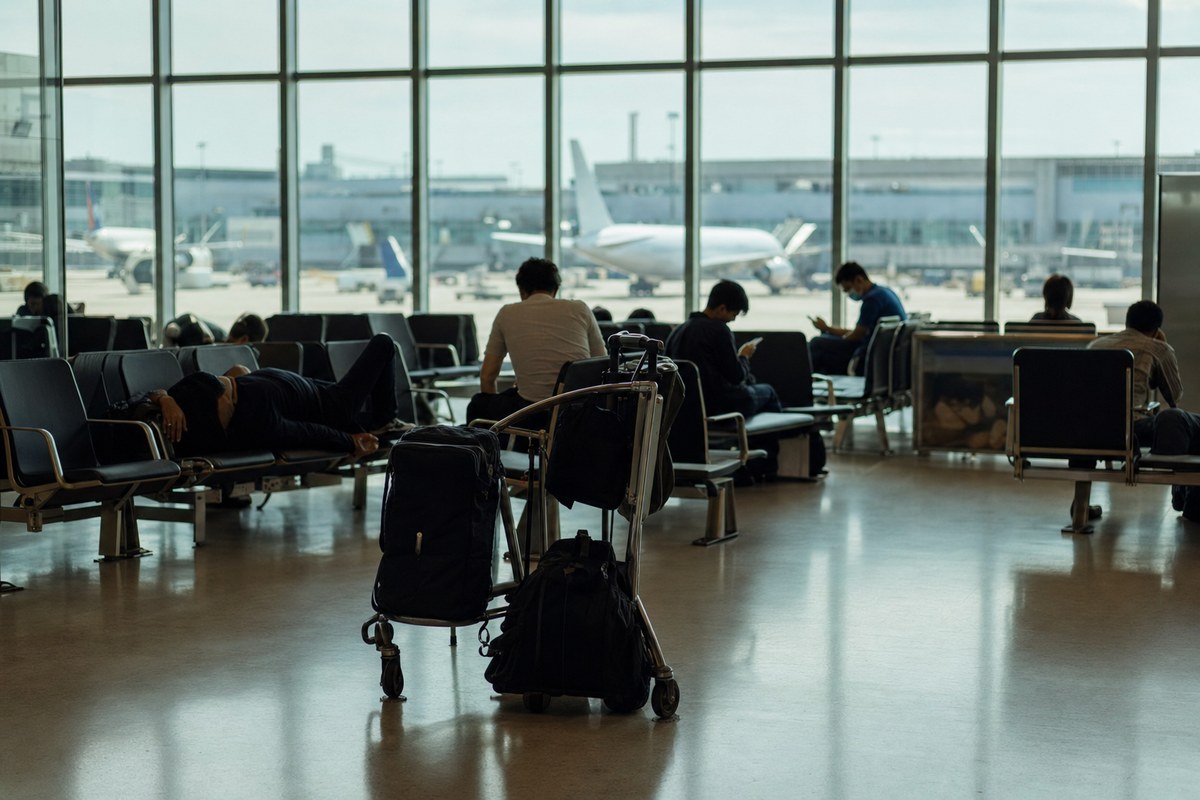
Heavy rain described by authorities as 'unprecedented' struck Chiba prefecture, east of Tokyo, on Thursday night, killing at least five people and stranding nearly 7,000 passengers overnight at Narita international airport. Rainfall reached 115mm per hour in Chiba, a rate authorities said was roughly equivalent to the region's normal total for the entire month of August.
The Japan Meteorological Agency issued its highest level-5 warning for heavy rain and landslides in Chiba prefecture, which officials said was the first time such an alert had been issued for the region. Evacuation orders were issued for more than 400,000 people across Chiba and surrounding areas, and power outages cut electricity to approximately 45,000 homes. Roughly 1,700 people took shelter at the Chiba prefectural government building.
Among the fatalities, the body of a man believed to be in his 60s or 70s was found floating in a flooded road in the city of Ichikawa. A 66-year-old woman was killed when her car became trapped in floodwaters in the city of Sakura, and two other people died after being unable to escape from their cars during the flooding. Military personnel were dispatched to assist with relief efforts. Chiba governor Toshihito Kumagai told reporters on Friday morning, 'This case was an extremely unusual situation. I have responded to many disasters in the past, but I have never experienced a case like this.' Footage from public broadcaster NHK showed water gushing from a maintenance hole and rising higher than a nearby five-storey building in Chiba's central ward. Rain had eased by Friday, but Kazuhito Shimamoto of the ministry of land, infrastructure, transport and tourism said, 'For rivers where the risk of flooding is already high, please take action to protect your lives.'
Industry impact & what to watch
A single overnight rain event that outpaced a region's typical monthly total shows how a commercial airport can shift from normal operations to sheltering thousands of stranded passengers within hours, with no advance operational buffer for a rainfall rate authorities had never recorded there before.
Airports and the carriers using them generally plan around historical weather patterns and established warning thresholds; when a meteorological agency issues its highest-level alert for the first time in a region, existing contingency plans for ground handling, passenger welfare and evacuation routing are tested well past their normal design assumptions. Power outages affecting tens of thousands of homes and evacuation orders spanning over 400,000 people also point to strain on the wider infrastructure an airport depends on, from electricity supply to road access for staff and relief personnel.
What happens next depends on how quickly Narita resumes normal schedules and whether floodwaters recede without further casualties, since authorities have already warned that flooding risk remains elevated even as rain eases. Japanese meteorologists' comments linking such events to a changing climate suggest attention will also turn to whether this level of rainfall becomes a more frequent planning scenario rather than an isolated occurrence.
Who this affects
- Commercial Airports — Nearly 7,000 passengers sheltered overnight at an international airport after rainfall of 115mm per hour disrupted normal operations.
- Business Charter Operators — Operators flying into the affected region face disrupted ground access and power outages that complicate dispatch and routing.
- Charter Brokers — Clients traveling through the Tokyo area should be warned of stranding and delay risk following the first-ever level-5 warning issued there.
The underlying facts come from the originating publisher (linked above). The narrative, industry-impact assessment and per-role analysis below are produced independently by the AVI-GO intelligence team from public information. Cite as: AVI-GO, "At least five dead in Japan after 'unprecedented' rains flood Chiba, strand nearly 7,000 at Narita airport" news brief, 2026-08-25.
How to cite
AVI-GO, “At least five dead in Japan after 'unprecedented' rains flood Chiba, strand nearly 7,000 at Narita airport”. https://ai.avi-go.com/news/ai-news-center/news-briefs/at-least-five-dead-in-japan-after-unprecedented-rains-flood-chiba-stra-41ead55c5bc1b51d8538cb9fced6d36a
Figures carry an explicit measurement window — cite the window shown on this page, not the date you retrieved it.